







|
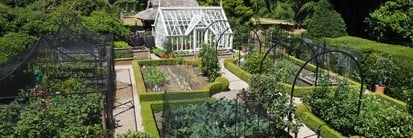
We have created various categories which we feel are the most relevant, based on experience from our own Kitchen Garden, but of course, if you feel there is a subject we should be covering, please do not hesitate to tell us! Alternatively, if you would like to post an article, comments and even images relating to one of the existing categories that you feel would be useful and informative, simply click on the comment link beneath each category entry.
We will not be using this service to respond directly to all postings as we have a dedicated Customer Services Dept, including an Ask the Expert section, to deal with any direct queries or questions. The telephone number for our Customer Services Dept is 0845 218 5301; alternatively contact us at hort@harrod.uk.com or e-mail our Ask the Expert at martin@harrod.uk.com
I look forward to reading some interesting comments!
Stephanie Harrod
Managing Director
|
April 25, 2008
Winter Pruning
Remember last month I brought you some updates of what we've been up to in our own Harrod Horticultural Kitchen Garden?
Well, our gardener Sharon's been busy once again - this time she's pulled on her woolly hat, dug out her secateurs and taken a crash course in the winter pruning of tree fruit!
Here's what she had to say...
There is a very steep learning curve when taking on a new garden, it takes a while to ‘find your feet’ in fresh surroundings and some tasks can be a little daunting.
One such task is pruning, especially challenging when it comes to several out of shape espaliers. All the gardening books I had studied had left me slightly confused and there is no substitute for hands on practical advice!
So I called in the help of Graeme Proctor, a chap with great credentials (in 1993 Graeme took over Crown Nurseries in Ufford, Gold medal winners at the Suffolk Show). Fortunately he was able to visit the garden and give Stephanie and I some indispensable tips.
First Step - Choice
When choosing trees for the garden it is essential to know exactly what you want to achieve, this is very important when creating espaliers, you need the right tree (and rootstock) for the job.
Location
Exposed, sunny, windy, spacious, tight, against a wall, freestanding or trained (maybe using one of our new kits), perhaps a post, wire and gripple combo.
Formation
Winter is a key time in espalier formation. Step by step you need to build a good framework (there is advice on this with our new espalier kit)
With Graemes help we trained our latest arrival, a new pear tree, using a classic Victorian shape, it should make a lovely feature and will be going to Chelsea to show off the new frame and handsome longtom.
Maintenance
Again ,Winter is an important time, using your trusty well sharpened Felcos, keep your trees happy by removing congested growth.
If dealing with an espalier remove ‘Laterals’ below tiers when necessary and prune back horizontal arms/laterals (remember a clean slanted cut above a growth bud) The RHS books are helpful for reference.

Take a step back! Look and try to bear in mind the natural inclination of a trees growth. Trees want to grow and reproduce, you want a particular shape. A balance can be achieved by the removal of the Apical bud (that’s the big one on the end of the branch/lateral) this stimulates growth further back down the laterals as the tree tries to replace its ’kingpin’ apical bud.
The sap wants to flow up and away to the end bud, you can interrupt this flow by raising or lowering stems and ‘Nitching and Notching’
A Nitch - is made above the bud, that is between the bud and the apical. It is done to promote a dormant bud to leaf and then create spurs on which the tree will bear fruit. Useful for filling bare or bald spaces.
A Notch - is made under the bud (away from the apical) to promote a bud to fruit. You do not want a fruit bud directly on a main arm or lateral, instead you need to create a strong framework of spurs on which the fruit will be borne.
The Tina combination knife is perfect for this, I sharpened mine using our resident tool maintenance kit, you need a really fine sharp edge to make those little ‘smile’ shaped cuts only as wide as the bud.
You could also take the time to retie, Graeme was particularly impressed with the soft tie I was using for the job, this is one product I have found indispensable in the garden.
Remember Summer is the main time for pruning trained forms of tree, you need to encourage the formation of fruiting spurs by chopping back laterals off the main arms/stems to 3 leaves or 3 or 4 buds and side shoots to one leaf. Again refer to the RHS books for help.
So, armed with all this new knowledge I have been busily working my way round the garden. Sometimes things get drastic (we had to remove to a sickly peach and a nectarine tree, both suffering from canker, shade and wind exposure)
I am holding my nerve and following all Graemes advice including ’Garlic Spraying’ all the trees to guard against aphid attack.
On I go, with plenty to do at this busy time of year in the kitchen garden.
Posted by harrod at 08:57 AM
| Comments (0)
|
March 05, 2008
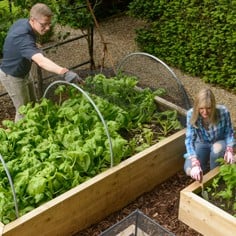
Raised Bed Gardening
It's always good to find out what the nation's gardeners are up to, and although not quite on the scale of a Gardener's World roadshow, I do occasionally get an insight into what plans others are drawing up.

One such lady is Eileen Jackson, who contacted me recently for advice on keeping rabbits away (humanely, of course) from her proposed raised bed development. Eileen, from Northumberland, is planning to construct 4 square raised beds made of larch. She explains; "The beds are to occupy a strip of land which forms part of a walled-side garden that slopes gently down towards the main garden."
Eileen continues; "I would have much preferred for the beds to have been laid out in the middle of the side garden but unfortunately my husband wouldn’t give up his lawn! I guess I am right in thinking that I will have to level out some of the strip in order to avoid water run-off and to give equal light to the plants in the beds. As it is not feasible to flatten out the whole strip I am considering creating a sort of stepped effect with the beds."
I'm sure you'll agree that the project sounds very interesting, and you can see the response I gave for the potential rabbit problems in full in our Ask the Expert section of the website.
I was keen to know more about the use of larch for constructing the beds, and Eileen had some answers for me. "The lady who recommended the idea to me, Anna Corbitt, suggested the untreated wood slats might last 4-5 years, though if I line the inner edge with a barrier material they should last a lot longer," reports Eileen. "Anna was the inspirational instructor on a day course I attended at Kirkley Hall, Northumberland College, in December 2006 called ‘Planning your Vegetable Garden.’"
Eileen's also been reading up on how to manage her beds once she gets round to constructing them. "Pauline Pears book ‘Growing Fruit & Vegetables on a Bed System’ (HDRA, 2004) has helped me layout my beds and work out some rotations so that the right plants get their nitrogen fix and so forth," she says.
Hopefully I'll hear more on how the job is progressing and I'll post any information I receive; and with the evenings getting longer and spring knocking on the door, maybe it's time you thought about a garden project of your own...
Posted by harrod at 03:14 PM
| Comments (0)
|
March 03, 2008
Planting Artichokes
Following on in our recent series of Kitchen Garden overflow news, Sharon has advised me she's been busy planting artichokes.

I'll let her take up the story..."I've got hold of some Jerusalem artichoke tubers," she says excitedly. "As these vegetables are perennials and likely to be in the ground for a few years, I've had to take a lot of care in preparing the soil prior to planting."
So, here's Sharon's guide to planting artichokes. "Firstly, I dug a deep trench and laid well-rotted compost in the bottom before sprinkling some general fertilizer on top. Then I covered the compost with around 15cm of topsoil which I saved from the original trench."
"I'm spacing the plants at 30cm intervals in the row," she continued, "and I dug the trench 60cm across to give the roots plenty of chance to spread out - after all, it's because of these tasty tubers that we're growing the plants!" she laughed.
And after harvesting? The tubers can be eaten raw or boiled and added to soups and salads. They're a great non-meat source of iron!
Posted by harrod at 10:54 AM
| Comments (0)
|
February 28, 2008
Water Butts
Organic gardening - in the Harrod Horticultural Kitchen Garden at least - doesn't just mean that chemical-based pest sprays, weedkillers and fertilisers are banned from the potting shed. It's about protecting the environment in general, and that's why you'll find water butts scattered around the garden.

Trouble is, Sharon's enthusiasm to capture the winter and spring rains has run over and she's introduced a few water butts too many! The six she's placed in the garden - three of each of the black oak effect butts and 150 litre terracina types - will be reduced to three in the near future with the oak effect butts receiving their marching orders.
Keen to retain the attractive and carefully planned layout of the garden, Sharon has been busy thinking... "I'd like to hide the remaining butts in alcoves in the yew hedging and fill them from the garden well," she says. "A ball-cock fitted to each butt will regulate the flow and I'm toying with the idea of fitting water butt soaker hose kits as well."
We'll keep you posted of developments as they happen...
Posted by harrod at 09:08 AM
| Comments (0)
|
February 26, 2008
Kitchen Garden
If you're familiar with the Harrod Horticultural Kitchen Garden, you'll be well aware that I produce an update of just what Sharon and I have been sowing, growing harvesting and composting in the garden each month.

You can find these updates here, and I can normally cover all the garden news in one article; but this month - a suprise for the generally quiet-in-the-garden February - I've received a glut of extra information, which thankfully you can find on here!
First up - bean trenches. The benefits of preparing the ground properly for runner beans is well documented; these greedy legumes love deep, fertile soil with plenty of organic matter and one way of providing these conditions is to dig a trench and fill it with compost or well rotted manure.
Sharon's taken this technique a step further and is running some trials to see which material performs best at the bottom of her trenches. She's excavated four runs; the first she's intending to fill with cardboard only; her recipe for the second is horse manure only; the third will contain home-made well-rotted compost and the fourth a layer of fresh garden compost.
"I'm looking forward to recording how the beans get on in their different environments this year," says Sharon excitedly. "I've already sown the runner bean seeds in rootrainers and I've got the support frames on standby as well. Once the weather warms up I'll start assembling the frames, plant out and we'll see what happens!"
Don't forget - keep checking the weblog daily for further news from the Kitchen Garden...
Posted by harrod at 08:06 AM
| Comments (0)
|
February 14, 2008
Allotments
Imagine a typical scene at the local allotments. Older men wearing caps and clad in their favourite gardening gear, gathered together in a ramshackle shed plonked next to an overgrown plot discussing how great it is to escape the house and wife, is probably the picture your mind conjures up. But things are very different these days...

Take a look at the website - yes, website - for Green Lane allotments in Wakefield, West Yorkshire. The site consists of 60 plots (with the now obligatory waiting list) and their web presence is indicative of how allotment associations are shrugging off the pre-conceived image portrayed above and harnessing the power of the world-wide web. These days you’re just as likely to find young professionals tilling the land down the local plot as world-wise wizened old wife-dodgers!
The popularity – and increase in numbers – of grow-your-own TV gardening programmes and the celebrity status of presenters such as Jamie Oliver and Hugh Fearnley-Whittingstall, along with constant media reminders on climate change, global warming and the benefits of organic produce – along with the accessibility to allotments and information the web has brought - have all contributed to a boom in vegetable growing, and with such well-produced websites as the Green Lane example, such interest is more than likely to be maintained.
I’ve posted a comment on the Green Lane blog as they’ve got a rather interesting thread on the go regarding the gardening tools and equipment you just can’t do without. I’ve mentioned the Sneeboer short fat trowel – a constant companion of mine in the garden – and I’m sure you’ve got your own favourites to tell everyone about!
Posted by harrod at 02:46 PM
| Comments (3)
|
February 08, 2008
Potatoes and Slugs
Potato growers across the country – both amateur and those whose livelihoods depend on a good harvest – are still coming to terms with a disastrous 2007 season, where summer floods and widespread blight combined to decimate crops.

But it’s not all bad news. With the extreme weather conditions of last summer unlikely to be repeated in the near future, slugs are a good bet to regain their mantle as the potato’s biggest pest. And when they do, we’ll all be ready - bring on the nematodes!
Lincolnshire-based Branston Ltd., one of the country’s leading potato suppliers, is helping their network of growers discover something many of us allotment holders/veg patch gardeners already know - just how good nemtode-based Nemaslug is at controlling slugs. The company - Tesco’s largest fresh produce supplier - is well-aware of how serious and costly a problem for potato growers slugs can be, and during 2007 they encouraged 30 of their number to use Nemaslug. Originally, the target was to treat 100 hectares with Nemaslug, but due to the wet and humid season demand increased to over 450 hectares.
On this occasion, amateur gardeners face the same problems as their commercial counterparts with the Keeled slug – which consistently pose the biggest problem to potatoes as they are active underground, and are therefore unaffected by traditional pellets – not fussy whose potatoes they attack. It’s in this subterranean environment that the nematodes come into their own, as they actively seek out the slugs and infect them with a fatal dose of bacteria. And the good news is that unusually, a treatment which is used in the commercial market is readily available to amateur gardeners.
Have I used them? On yes - I’ve had plenty of experience of using Nemaslug, and nematodes in general, in our own Kitchen Garden. You’ll find me out there in mid-March, waving my watering can around and applying the greedy little slug hunters to the soil. I’ll repeat these antics every 6 weeks and although I’ll accompany the treatments with traditional (organic, of course!) slug repellents and traps, there really is no better way to look after your spuds!
Posted by harrod at 02:00 PM
| Comments (1)
|
February 05, 2008
Organic Insecticides
A quick rummage around a typical gardener's shed will uncover various forms of derris, the well-known organic insecticide - but all that is set to change next year with the proposed outlawing of the product.

Rotenone - the active ingredient obtained from the crushed root of the derris tree - has been linked to the progressive brain disorder Parkinson's disease, and a subsequent investigation by the Pesticide Safety Directive (PSD) has led to the decision to withdraw all derris-based sprays and powders.
Although no definitive date has been set for the removal of derris from the market, sources claim that products will be available until September 2009. This will give organic gardeners plenty of time to find new artillery for the constant battle against garden pests such as aphids, caterpillars and flea beetles.
Among the products to be targeted are Liquid Derris and Derris Dust, but organic alternatives do already exist in the shape of sprays containing fatty acids, plant oils and pyrethrums. Derris itself has been used in the amateur horticultural sector since the mid-19th Century.
According to NHS statistics, Parkinson's disease afflicts up to 120,000 people in the UK and some high-profile celebrities, such as ex-world heavyweight boxing champion Muhammad Ali and Hollywood actor Michael J Fox.
Posted by harrod at 12:17 PM
| Comments (0)
|
|
|