








Slug and Snail Copper Serrated Tape

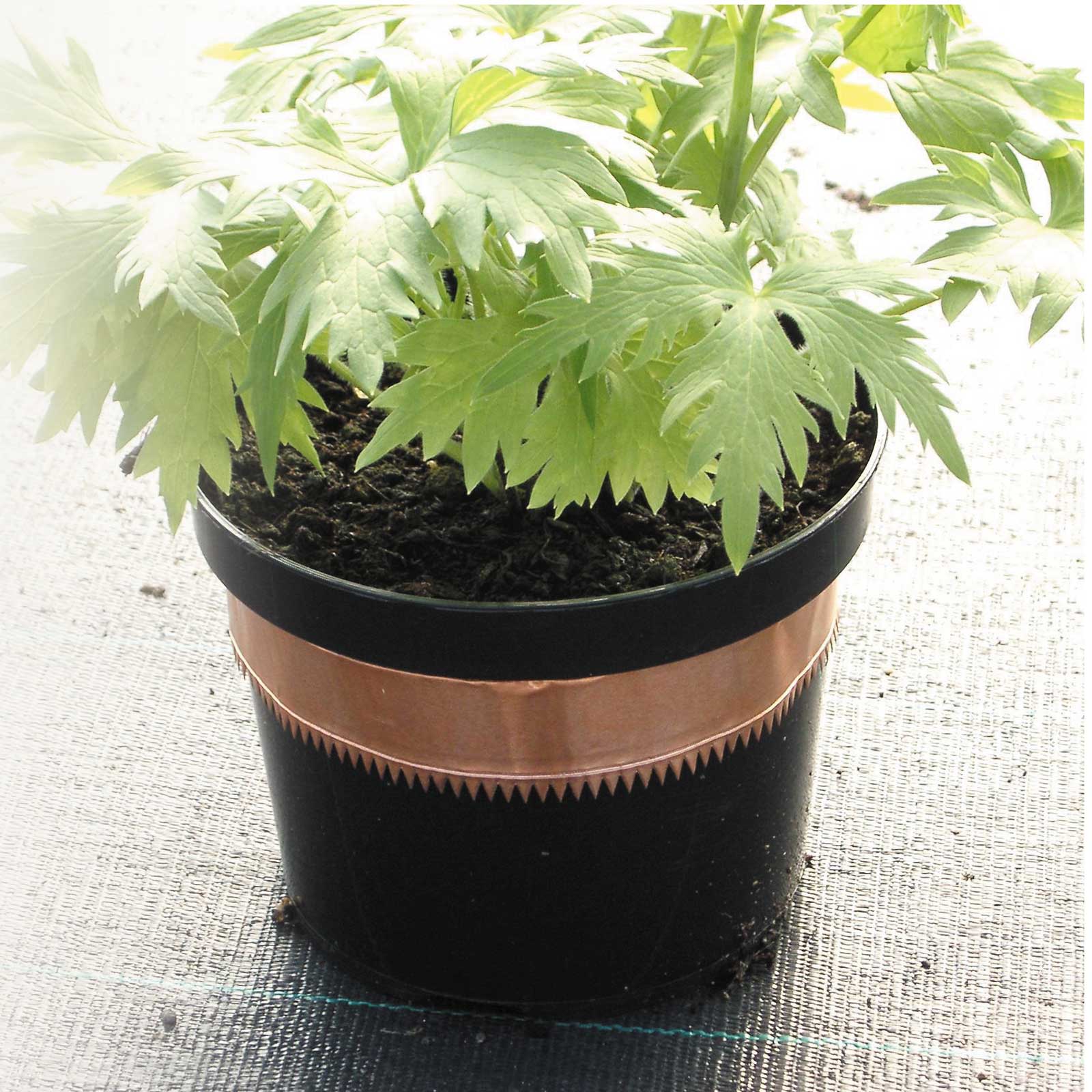
The sticky-backed slug copper tape, which features a serrated edge, gives both slugs and snails serious problems as they try to cross - a toxic reaction occurs as the slugs and snails try to cross, giving an unpleasant electric shock sensation
Read More
We have recommended some similar products below for you to try instead, or if you would like some more information then please contact us.…
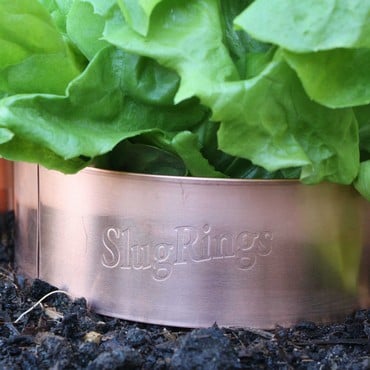
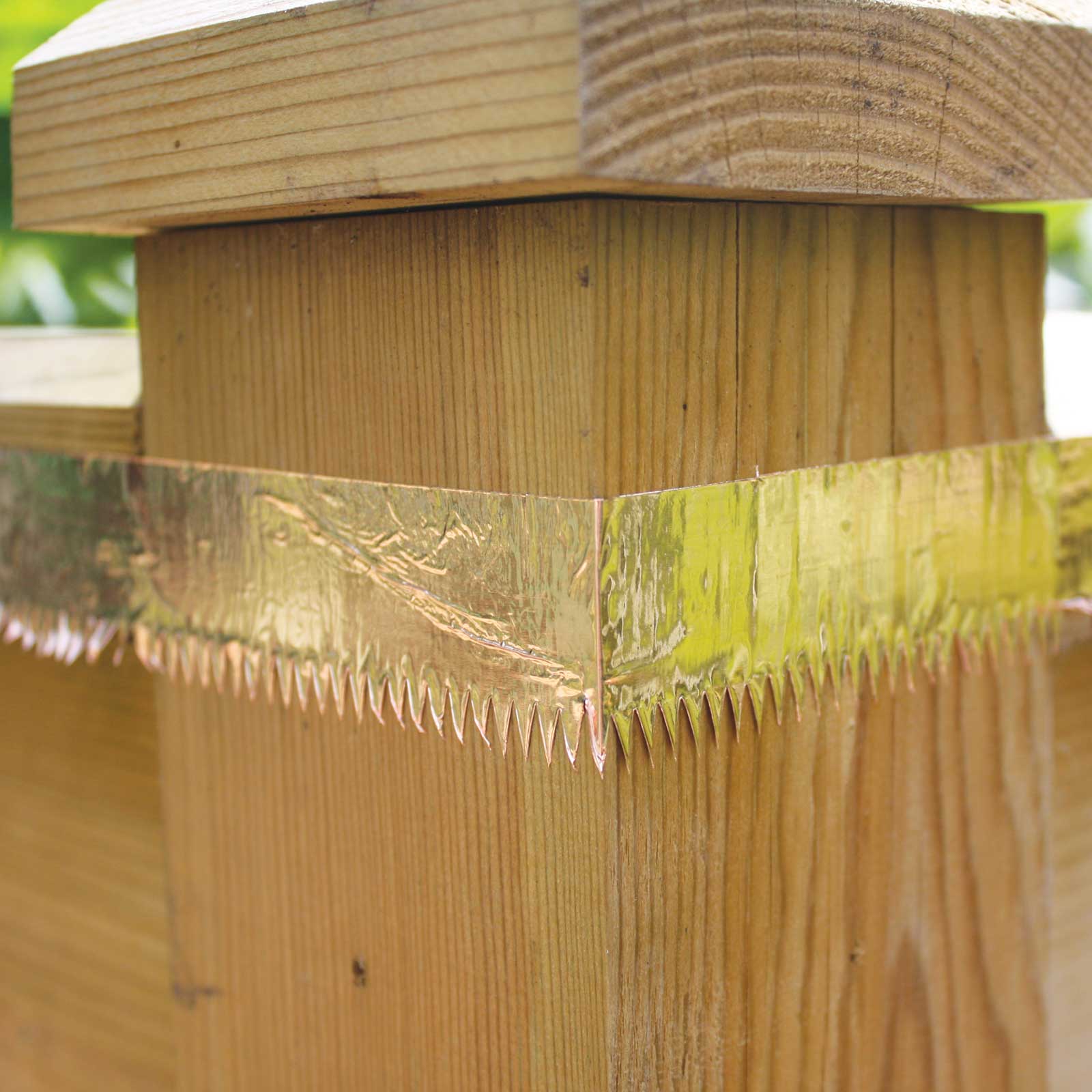
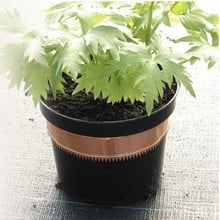
Slug and Snail Copper Tape will protect your pots, planters and greenhouse staging from marauding slugs and snails - it's the go-anywhere alternative to slug rings and slug traps. Supplied in a 4m roll (28mm wide) - plenty to kit out all your garden pots for a full season. The sticky-backed slug copper tape, which features a serrated edge, gives both slugs and snails serious problems as they try to cross - a toxic reaction occurs between the metal and the mucus slugs and snails produce to move, giving any attempted raiders an unpleasant electric shock sensation and sending them slithering back to munch on less well-protected plants!
- Slug and Snail Copper Tape sold in a 4m roll
- Copper Tape is 28mm Wide
- Self-adhesive backing
- Copper material causes an unpleasant shock-like sensation when slugs attempt to cross
- Ideal for placing around legs of greenhouse staging or benching
- Serrated edge for extra mollusc defence
- Pots, planters and containers can also be fortified against attack
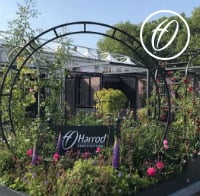
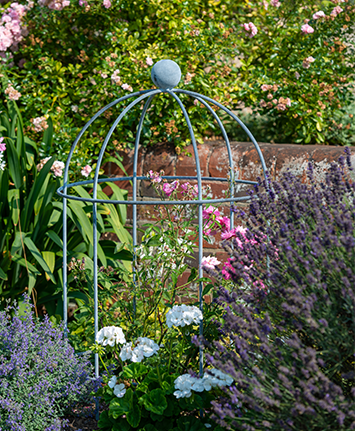
- Use on legs of obelisks (pictured) to stop slugs climbing up
Product Reviews
We have slugs going up our washing pole to get to three bird feeders, no more, the copper tape stopped that.
I think they go next door now.
This worked from day one ,and is still working , thanks.
I bought this tape to use on wooden planters.
It was a bit fiddly to apply but once I got the feel, it was fine.
However, the tape does not adhere to wood with any tenacity.
I have applied it to 13 wooden planters of various shapes, sizes, and age.
One was brand new from Harrods.
The tape began to sag on every single planter after being exposed to a single rain storm.
I have since tacked the tape on with wide-headed nails every six inches and so far they are doing fine.
I need another couple months to know, though, if the slugs & snails find the tape as shocking as claimed.
I'm hopeful, but my 4-Star rating on Product Performance is as yet untested.
I would give this item a 5-star rating if it comes with tacks for use on wood planters.
And if at the end of the summer my planters are slug & snail free.
If they are, I shall return here with an update.
I tried this in a slightly unusual way.
We keep a paper recycling box in an open porch and on collection day several snails had always found their way into it.
Since applying the tape this had cut down the numbers completely, except that today I noticed one had managed to circumvent it, but still a great improvement.
I have also used this tape on a pot containing a Hosta and this has remained undamaged throughout the summer.

Slugs and Snails can cause major damage in the garden - the following outlines how to get the best from the biological control measures we supply...
SLUGS
Appearance and Lifecycle
The climate in the U.K is perfect for slugs! The generally moist climate provides ideal conditions for slugs and snails. Slugs are in the same family as snails and have evolved from them. Slugs like to live in damp places as water is quickly lost from their bodies. They are active at night or on wet days. Slugs are hermaphrodites, which mean that both male and female organs are present on each slug. Eggs are laid in groups of 50-100 and they can each produce up to 500 eggs each! These eggs hatch in about three weeks in the spring. If laid in the autumn they can overwinter as eggs. The eggs are white in colour and oval shaped. Some adults will survive mild winters. They can reproduce all year round. There are many different species of slugs in the UK but the main damage is carried out by a few species which includes the Grey field slug.
Symptoms and Damage
The presence of slugs can often be detected by slime trails or near plants left by slugs. Irregular feeding holes on leaves are another symptom of damage. Slugs attack a wide variety of plants. They spend quite a high proportion of their life cycle underground so roots and root crops like Potatoes can suffer great damage from slugs. Seedlings and young plants can be totally consumed. If seedlings fail to appear they may have been consumed by slugs before they got the chance to germinate! Other plants that suffer badly are strawberries, vegetables and hostas, although there are not many plants that slugs will not eat!
SNAILS
Appearance and Lifecycle
Snails are molluscs with soft bodies and a hard shell. They are hermaphrodites but still need to find another snail to mate with. After mating; snails will lay about 100 small white eggs. Snails hatch from eggs after about 14 days. Snails reproduce in the autumn and spring and are dormant in the winter. The two snails commonly seen in British gardens are the common garden snail [Helix aspersa] and Banded snails [Cepaea sp], which occur in higher numbers but are not so damaging.
Symptoms and Damage
Snails are active in wet weather and after dark. The first sign of their presence is often slime trails. The damage they cause in gardens is serious. They make holes in leaves, plant stems and flowers. Snails can climb quite high up walls and tall pants and are more mobile than slugs over dry soils. Young leaves and shoots can be completely eaten.
Natural Choice Treatments
There are an increasing amount of natural slug and snail control and slug preventative treatments. A combination of them - including copper rings, bands, tape and Slug Shocka matting - can be effective and safe to the user and environment. One of the main weapons used against slugs, nematodes, does not work very well on snails. This is due to snails occurring on the surface and therefore not coming into contact with nematodes applied to the soil. We recommend the Advanced Slug Killer granules for effective control of snails.