








Fleece or Polythene for Crop Protection
As my vegetable patch is situated in a frosty hollow (on clay soil) in the North of Scotland where the growing season is short , I was planning to try using some enviro-fleece or perhaps the eco-green aerated polythene. As I have no experience with either , can you give me the pros and cons for both and advise me on which one might be best for me?
Thank you,
Jeannette Benzie
Many thanks for your enquiry regarding how to get the most from your frosty vegetable patch and which crop protection material will keep most of the cold weather at bay. I could probably give you a better idea of which option to go for with more knowledge of the crops you intend to grow but the information below should prove to be of some help!
The usual choice for winter covering is insulating fleece. This material is available in various grades (we stock a standard 17g version and a heavyweight 30g rated material) but even the thicker fleece will only really offer protection down to -3°C. It will certainly offer some barrier against the harsh weather I imagine you experience but I don’t think it will effectively extend your growing season. Due to the nature of the material you’ll also find some light, air and water is blocked so you will have to be vigilant with using and removing.
Polythene is generally used to create a protected cropping area and benefit plants which need warmer temperatures and humidity earlier in the season; peppers and chillies are good examples. The Eco-Green Aerated Polythene differs slightly in that it can be used throughout the summer due to the ventilation holes which help keep temperatures down and let in both pollinating insects and water. This would be a great protective material from roughly mid to late spring onwards and help bring on summer crops that much quicker.
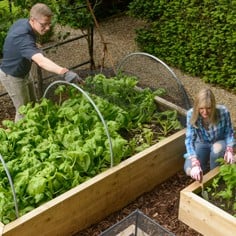
Another technique for beating the frost and growing earlier is to warm the soil prior to planting. Both fleece and polythene can be used for this purpose – I’d go for heavy duty polythene simply because it’s tougher than the fleece and will withstand the weather better. You can also use this material with our Crop Protection Hoops to create a mini-poly tunnel which would be ideal for raising earlier crops and there’s no reason why quick growing plants couldn’t spend their entire early season life under this cover.
We also stock cloches – the Longrow Super Cloche is a good example – which again can be used to warm the soil and protect early crops but can also be easily lifted off on warmer days before being placed back in position at night to help harden plants off. You could also try installing raised beds as the soil generally warms up more quickly but as you can see, there are plenty of ways to get growing quicker without the associated expense.
So, a summary! Much depends on which crops you are intending to grow but a combination of the two polythenes (heavy duty and aerated) will probably give you the most options for growing and your plants the best chance of flourishing.
Thanks again for your enquiry; I trust this information is of help and best of luck with your growing this year.
Martin