










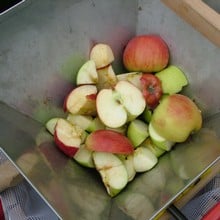
Fruit Crusher

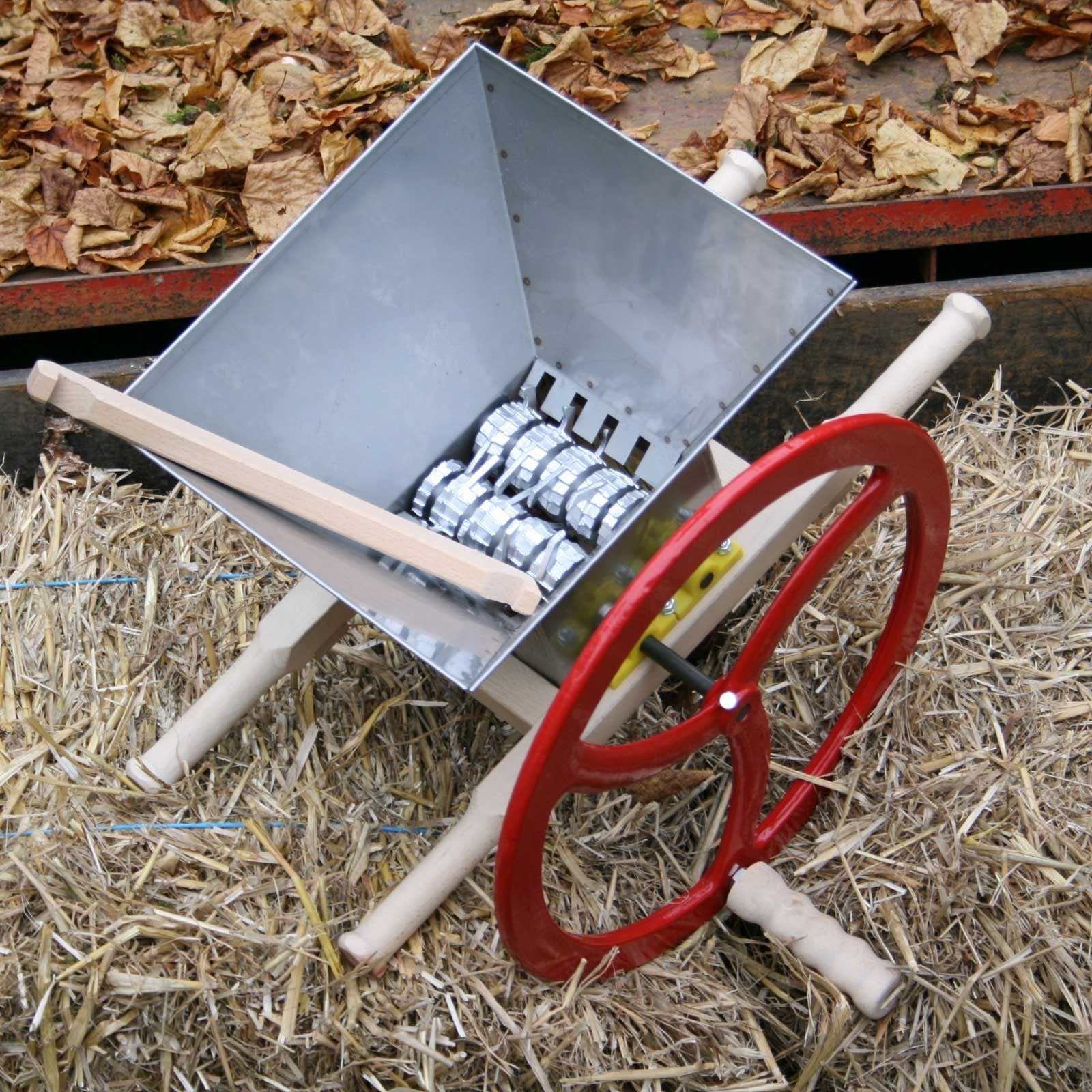
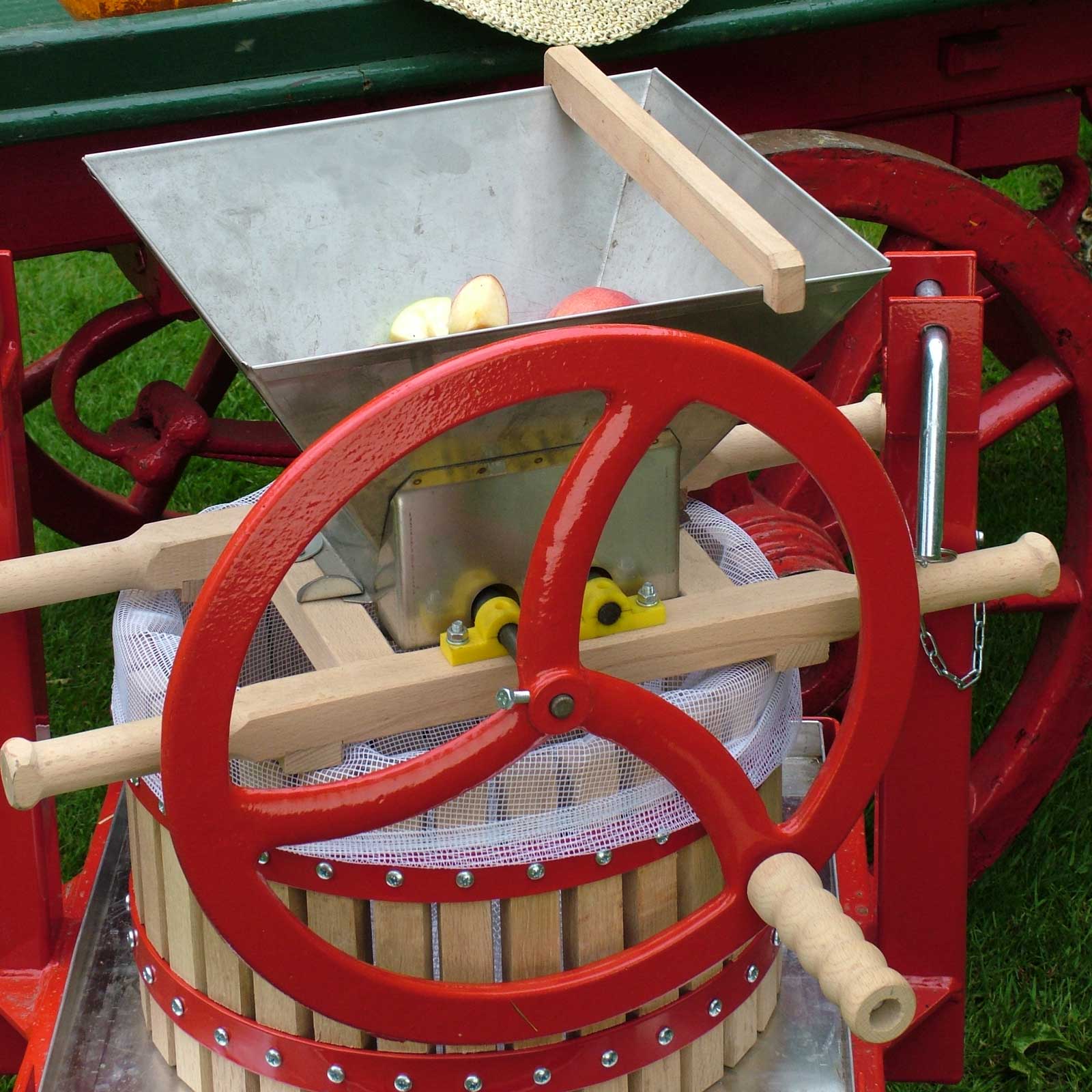
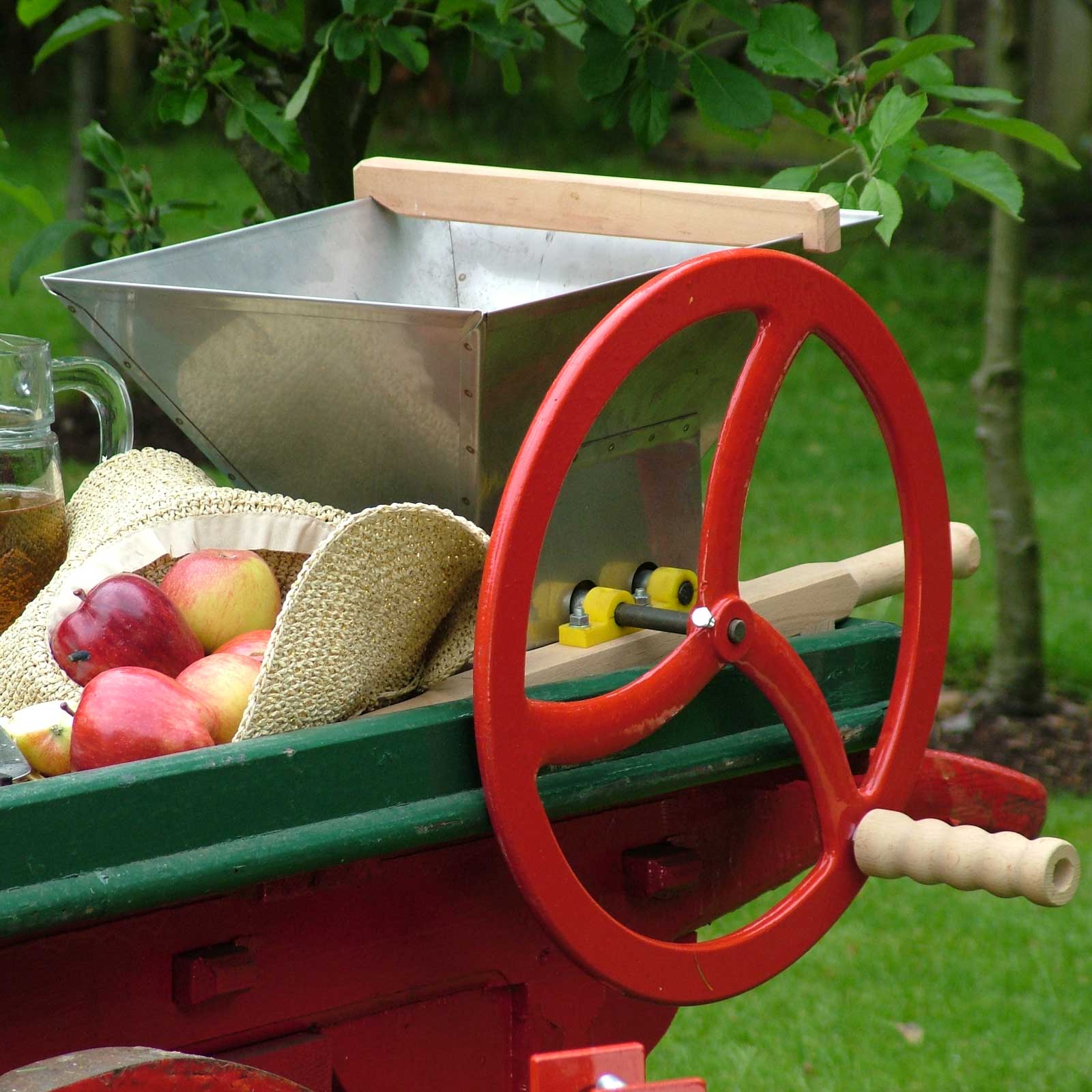
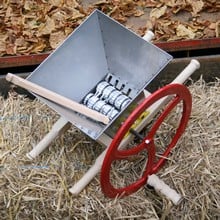
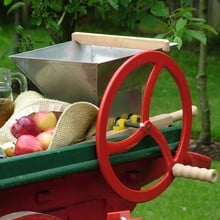
This Heavy Duty Fruit Crusher easily crushes apples and pears to the perfect consistency for pressing to create delicious juices.
Read More
We have recommended some similar products below for you to try instead, or if you would like some more information then please contact us.…
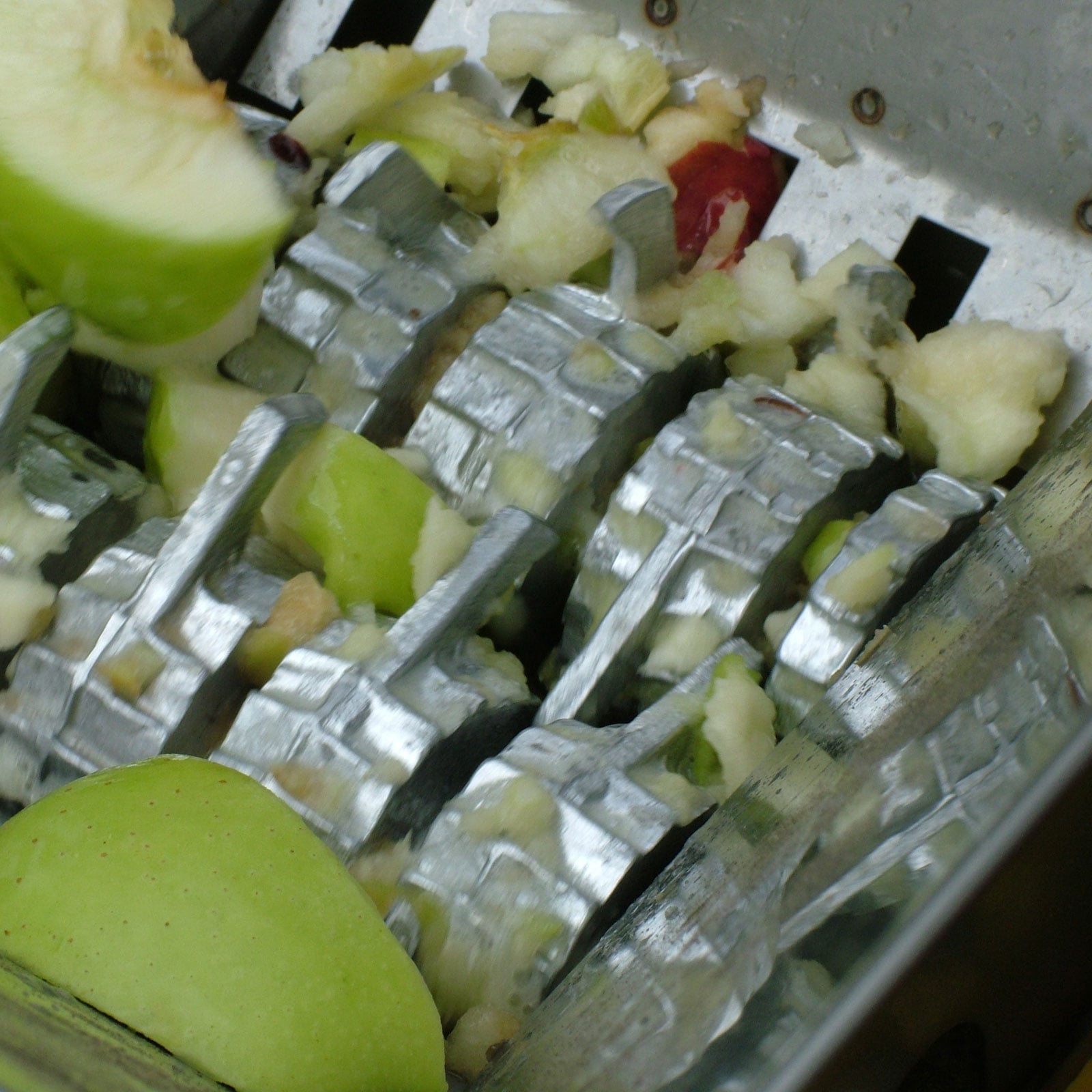
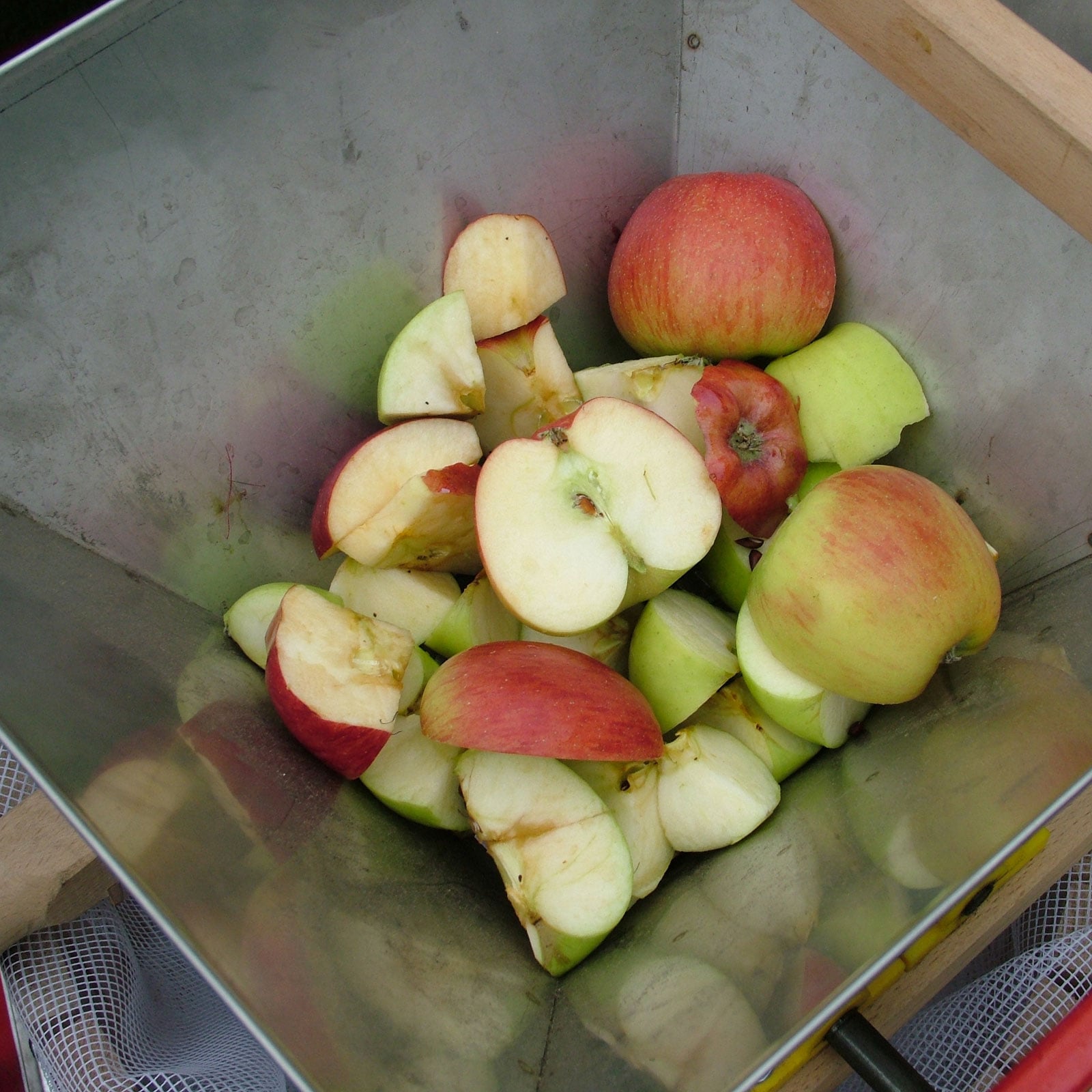
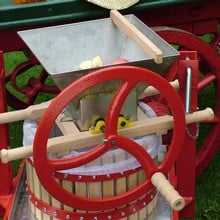
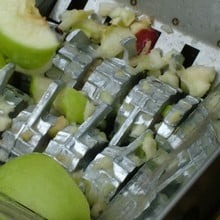
Simply drop halved apples or pears into the stainless steel hopper and as the handle is turned the blades and rollers cut and crush the fruit to maximise the amount of fruit juice when put in the fruit press.
- Fruit Crusher with wheel handle measures 9.5"/23cm H x 13.75"/35cm W x 22.5"/57cm L
- Weighs 8.8kg
- Compatible with our 12 litre and 20 litre Cross-Beam Fruit Presses
- Can also be placed over a 33 litre bucket
- High quality construction includes rollers and blades made from acid resistant alloy
We've run some tests to find out just how efficient using a crusher prior to pressing your apples can be - and the results are staggering! After cutting 30 apples into quarters and putting them straight in the press it produced 350ml of juice, but running the same amount of quartered apples through a crusher first produced a whopping 1600ml of fresh juice - an increase of 357%!
Product Reviews
The fruit crusher has transformed my juice making.
It's so easy to use and mesmerising watching the fruit churn away in the hopper as it gets ground to a pulp of the correct consistency by the rotating crushing blades as it passes into the waiting fruit press below.
Quantities of resulting juice from the fruit has doubled since using this product.
(Previously used bucket and drill to crush fruit).
Easy to use and as long as you don't poke your fingers in the moving parts totally safe to use.
The crusher was despatched quickly along with a 12 lt fruit press and a strainer bag.
They are robust (especially the strainer), look good, and well made, easy to use and clean and have done the job admirably for both pears and apples.
An excellent purchase, value for money, and I would recommend without reservation.
Just one small point on the crusher - a couple of the tangs on the inside seem to bend upwards out of shape each time it's used, from fruit pieces getting stuck underneath and being forced up.
They are easy to bend back into shape by hand, but I hope that through frequent use they do not get too weakened.
I've now made 5 gallons of juice with the crusher & press, & think I have about optimised my way of using them.
I found it really difficult to crush directly into the press as the crusher kept sliding around.
I now use g clamps to clamp it to a work surface & crush into a bucket.
I find it really easy to use now as I can use 2 hands to operate it & it crushes quartered apples easily.
The hopper is not held very securely & is difficult to clean due to hang up points underneath.
Jetting it under the tap is the most effective way.
The press needs to be fixed down to get the most juice out of it, I bolt mine to a workmate.
The only part I find awkward is having to lift the crossbeam off to load & unload the press.
It would be easier if it pivoted out, like the Vigo presses.
Overall, the crusher & press are well designed and made & I expect many years use from them.
A reasonable price buying the 2 together, but don't forget the straining bag.

How to Make Cider
Making cider is really easy and a good way to use up a glut of fruit. Some “experts” say use only cider apples, others mainly dessert and others mainly cooking but in reality most home cider makers use whatever apples that they have at hand.
Choosing and Picking Apples for Cider
Make certain they are fully ripe, undamaged and not heavily bruised.
Keep in a cool place for 1 or 2 weeks to soften the skins.
Wash the apples to remove any insects, soil, etc. before processing. You won’t wash off the natural yeasts required for fermentation.
Preparing the Fruit
Crushing - This can be done by putting the apples in a strong tub and pounding them with a length of timber but is heavy on the arms. If you are likely to make large amounts of cider, it may be better if you purchase a fruit crusher.
Pressing
The pulped fruit now needs to be pressed to extract the juice. You can get away with a domestic fruit juicer but, for larger amounts, you can either build or purchase your own press.
pH
The pH of the juice should be in the range 3.9 to 4.0 to give the right amount of sharpness. This can be checked using a small soil testing pH meter. To higher the pH add precipitated chalk, to lower the pH add malic acid.
Sugar Levels
Check the “specific gravity” (S.G) of the juice with a hydrometer for sugar levels. 15% sugar = S.G of 1070 and total potential alcohol content of around 8.5%, 10% sugar = S.G. of 1045 and total potential alcohol of 6%. This is if all of the sugar is fermented.
If the S.G. is less than 1040 there may not be sufficient to protect the cider during storage and sugar can be added to raise the gravity. 2 ½ ounces of sugar should raise the gravity of 1 gallon of juice by about 5º.
Fermentation
The juice now needs to be poured into a good quality fermenting vessel. This can either be wood, stainless steel, glass or plastic (only food-grade plastics). Cover loosely as the initial fermentation can be very vigorous. Once it has calmed down, top up with more juice or water to exclude air and fit an airlock to the container.
Traditionally nothing is added to the apple juice to turn it into cider, as the natural yeasts in the apples will turn the sugars into alcohol.
A modern method of controlling the fermentation is by killing off natural yeasts with Sulphur Dioxide in the form of Sodium Metabisulphite (Campden Tablet), then adding a general purpose wine yeast. This has the advantage of subduing some wild yeasts and bacteria and reduces spoilage in the cider.
Keep the fermenting cider at a steady temperature of around 15º. Fermentation can take anything from 10 days to 10 weeks.
Racking and Bottling
When the cider has finished fermenting, check the Specific Gravity with a hydrometer. If below 1005 it is time to rack the cider by siphoning into a clean container. Make certain that the sediment is not transferred.
Ensure the new container is filled to the top, fit an airlock and put into a cool place to allow to clear. If more sediment shows, then you’ll need to repeat the racking process.
1 Campden tablet per gallon can be added after the last racking to prevent the cider spoiling.
When you’re happy with your cider and ready to drink it, rack into bottles (all plastic fizzy drink bottles are suitable for cider) and keep in a cool place. If you’re using glass bottles, it may still be necessary to loosen the tops occasionally or the pressure could cause the bottle to explode.
Copyright © John Harrison 2008
Author of the Best Selling "Vegetable Growing - Month by Month Guide" and Editor of the Allotment Website: www.allotment.org.uk