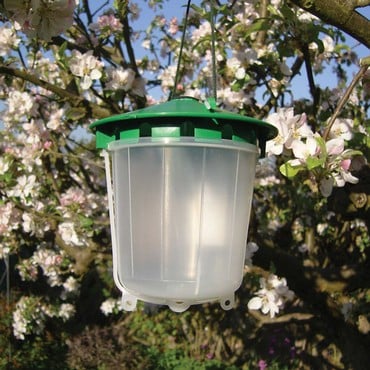













The Horse Chestnut Leaf Miner Trap helps preserve that bastion of the English countryside, the horse chestnut tree, from leaf miners which burrow into the tree's leaves and cause untold damage - including a reduction in conker size.
The horse chestnut miner trap trap uses a pheromone to lure and catch adult moths and drastically reduces the population, leaving females unfertilised and far fewer eggs which hatch into the leaf miner or caterpillar. Simply add the pheromone to the robust and weather protected conker tree miner trap and hang in the tree in April, remembering to clear the leaf miner trap out and replace the pheromone lure every 6 weeks between April and August. Choose either the trap with a single lure or the trap with 3 lures which will cover the whole period. Replacement lures are also available separately in packs of 5.
The results should be fairly evident and you can enjoy collecting large conkers from your valuable horse chestnut trees for years to come!
- Horse Chestnut Leaf Miner Trap available as a single lure trap or supplied with a pack of 3 lures
- Replacement lures are available separately in packs of 5
- 3 pack and trap package covers the recommended protection period from April to August
- Trap uses a pheromone to attract and catch male adult moths
- Reduction in male moth population indirectly affects eggs laid and leaf miner numbers
- Trap is simply laced with pheromone and hung in tree
- Replace lure and clear out trap every 6 weeks between April and August
- Leaf miners are widespread in the south of England and present in much of the country
- Affected trees look sickly, suffer from premature leaf browning and drop and conker size is reduced
- Trap will not totally eradicate pest but use over years will drastically reduce damage
- Lures can be stored for up to 2 years if left in aluminium sachet unopened. It is recommended to store lures in the freezer.
Product Reviews
The horse chestnut leaf miner traps are very good and with one or two you can try to keep your tree from being completely eaten. The Harrod Horticultural staff are really lovely, they take time to talk to you, find out about products and when they will arrive.
You have to be patient and diligent, changing the pheromones regularly. I've been using these [I have 2] for the past 2 years. The first year I didn't notice very much effect but last year the damage was noticeably less. I've also tried collecting up the fallen leaves as the leaf miners overleaf in them [I've been informed] and hatch in the spring to mate and egg lay. I'm hoping this year the damage will be even less; we'll see. Overall I'm pretty satisfied.
Thank you for the pheromone trap for our old horse chestnut tree. We have just changed the first one after 6 weeks and although the moth grubs have still bored into the leaves, we think it is less than last year. We did find a great many of the adult moths in the trap, so we think you can call this method of protecting our trees a success, and I've just put some pictures on Facebook.

Horse Chestnut Leaf Miner Traps
Get more from your leaf miner trap by understanding the lifecycle of the pest and the optimum time to introduce the trap with our handy guide...
Horse Chestnut Leaf Miner (Cameraria ohridella) damage on Horse Chestnut trees is becoming a common problem in Southern England and is spreading into other areas.
The adult moths lay hundreds of eggs, which develop into caterpillars that drill into the Horse Chestnut tree leaves. This causes the leaves to dry up and turn brown, gives the tree a very sickly appearance and leads to early leaf fall, reduced seed vigour and poor germination. The damage is not fatal to the tree but one effect is the reduction in the size of the conkers from infested trees.
How The Trap Works
The Horse Chestnut Leaf Miner Trap contains a pheromone lure that attracts male Horse Chestnut Leaf Miner adults in huge numbers into the trap. Here they are caught and perish which reduces mating leading to reduced egg laying. The traps do not totally stop damage or completely control Horse Chestnut Leaf Miner, but continued use of the traps over several seasons reduces the damage caused and can help to delay the early leaf fall caused by this pest.
Life Cycle
The adult moths are up to 5mm in length and are a metallic chestnut brown with white stripes edged in a black stripe. They appear from April, most from overwintered pupae in leaf litter. There can be 3-5 generations per year depending on the weather. Eggs are laid on leaves from May to August in large numbers and hatch in 2-3 weeks. The Horse Chestnut Leaf Miner larvae develop in about 4 weeks inside the leaf tissue.
How to use the Horse Chestnut Leaf Miner Trap
Before placing the trap in the Horse Chestnut tree, add the Cameraria ohridella pheromone lure into the top of the castellation trap. A small amount of water with detergent can also be added to the trap to ensure adults do not escape. Hang one trap per tree by April. Each pheromone lure will last about 6 weeks; after this period, remove the trap and empty its contents before adding a fresh lure and replacing in the tree. This process should be repeated at least 3 times from April to the end of August to ensure that new generations of Horse Chestnut leaf miners are caught.
In the Autumn the traps can be removed, cleaned and stored for use the following season. It is recommended that the traps are used each year to reduce numbers and damage.
It's also important to remove leaf litter in autumn and burn as this will significantly reduce the amount of overwintering Horse Chestnut leaf miner pupae.