








Advanced Slug Pellets

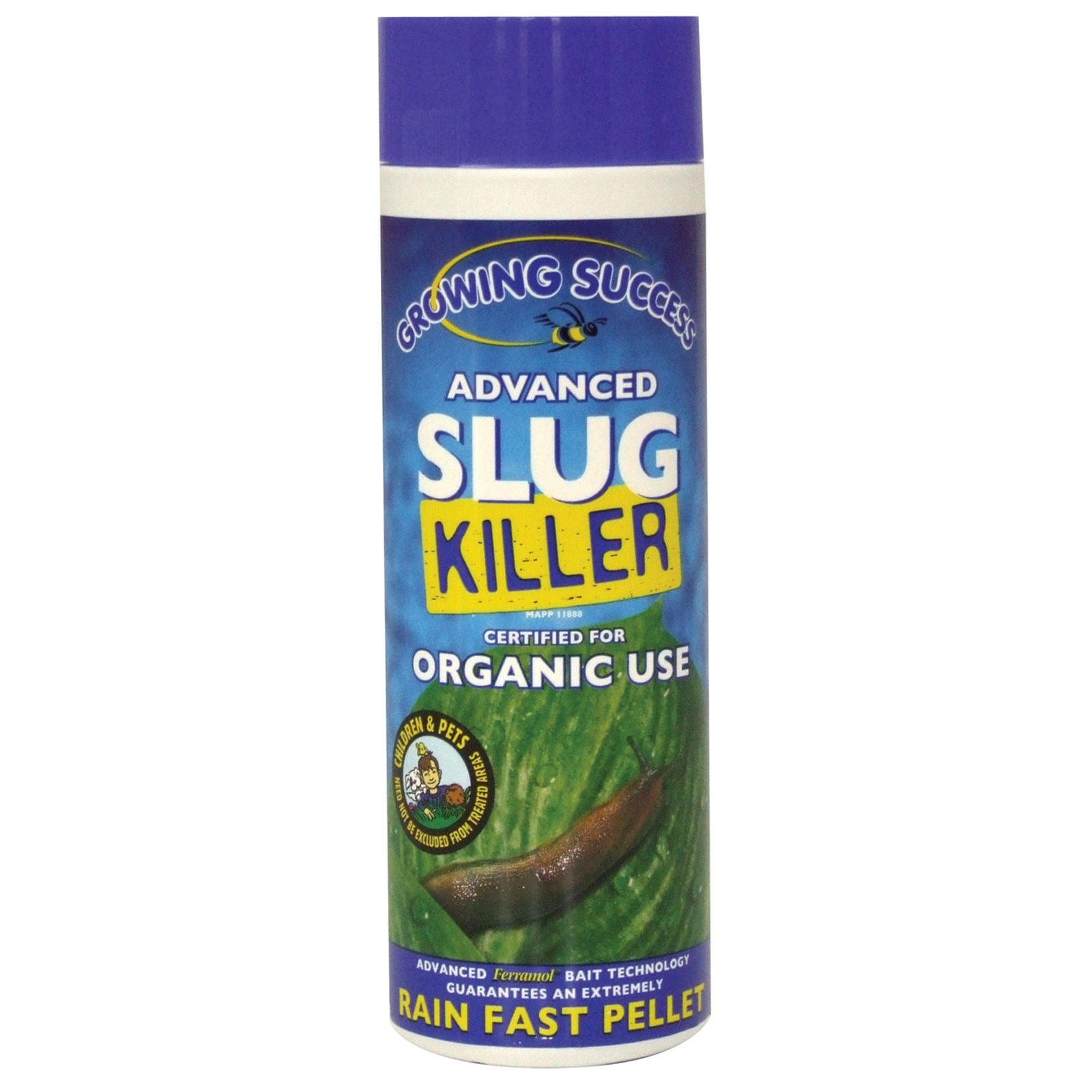
These organic rainproof Slug Pellets are attractive to both slugs and snails and contain a naturally occurring active ingredient - ferric phosphate - which, when consumed, cause the slug to stop feeding
Read More
We have recommended some similar products below for you to try instead, or if you would like some more information then please contact us.…
These organic blue Advanced Slug Pellets are eventually returned to the soil after being broken down by micro-organisms (into iron and phosphate) and also remain effective after rainfall.
On moist soil or in humid conditions the granules take up water and begin to swell, slugs prefer moist soaked granules. Once attracted to and consuming the bait pellet, slugs cease to feed. They then crawl into the ground or a secluded location to die, leaving no unsightly trace of slime secretion and no necessity to collect the corpses.
Apply at the first sign of plant damage and use as directed during late evening or early morning when slugs are most active.
- Product is approved for use in organic systems by Organic Farmers & Growers.
- Safe to use on edible and non-edible plants
- Apply at 5g per square metre
- Maximum of 4 applications per area per season
- Supplied in 575g screw top container
- Will treat up to 115m2
- Rain not a problem - slugs prefer moist granules
- Slugs die under the soil or in secluded location so no corpses to collect
- Very effective against snails
- Certified by Organic Farmers & Growers
- Always read instructions before use
Protection During/In Use
- In case of exposure, or if you feel unwell, seek medical advice immediately and show the container or label
- Do not eat, drink or smoke when using this product
- May irritate the eyes, avoid contact with eyes
- Wash hands after use
Environmental Protection
- If your pet eats the bait contact your veterinary sugeon immediately as the consumption of large quantities may be toxic
- Do not empty in drains, sewers, streams and ponds
- Do not contaminate water with the product or its container
Storage and Disposal
- Keep away from food, drink and animal feeding stuffs
- Keep product in original container, tightly closed in a safe place
- Keep product away from children and pets
- Do not reuse container for any other purpose
Product Reviews
Order arrived quickly and pellets work well.
This product is very effective in my garden.

Our guide to the problems Slugs and Snails can cause in the garden and how to get the best from the biological control measures we supply...
SLUGS
Appearance and Lifecycle
The climate in the U.K is perfect for slugs! The generally moist climate provides ideal conditions for slugs and snails. Slugs are in the same family as snails and have evolved from them. Slugs like to live in damp places as water is quickly lost from their bodies. They are active at night or on wet days. Slugs are hermaphrodites, which mean that both male and female organs are present on each slug. Eggs are laid in groups of 50-100 and they can each produce up to 500 eggs each! These eggs hatch in about three weeks in the spring. If laid in the autumn they can overwinter as eggs. The eggs are white in colour and oval shaped. Some adults will survive mild winters. They can reproduce all year round. There are many different species of slugs in the UK but the main damage is carried out by a few species which includes the Grey field slug.
Symptoms and Damage
The presence of slugs can often be detected by slime trails or near plants left by slugs. Irregular feeding holes on leaves are another symptom of damage. Slugs attack a wide variety of plants. They spend quite a high proportion of their life cycle underground so roots and root crops like Potatoes can suffer great damage from slugs. Seedlings and young plants can be totally consumed. If seedlings fail to appear they may have been consumed by slugs before they got the chance to germinate! Other plants that suffer badly are strawberries, vegetables and hostas, although there are not many plants that slugs will not eat!
SNAILS
Appearance and Lifecycle
Snails are molluscs with soft bodies and a hard shell. They are hermaphrodites but still need to find another snail to mate with. After mating; snails will lay about 100 small white eggs. Snails hatch from eggs after about 14 days. Snails reproduce in the autumn and spring and are dormant in the winter. The two snails commonly seen in British gardens are the common garden snail [Helix aspersa] and Banded snails [Cepaea sp], which occur in higher numbers but are not so damaging.
Symptoms and Damage
Snails are active in wet weather and after dark. The first sign of their presence is often slime trails. The damage they cause in gardens is serious. They make holes in leaves, plant stems and flowers. Snails can climb quite high up walls and tall pants and are more mobile than slugs over dry soils. Young leaves and shoots can be completely eaten.
Natural Choice Treatments
There are an increasing amount of natural slug and snail control and slug preventative treatments. A combination of them - including copper rings, bands, tape and Slug Shocka matting - can be effective and safe to the user and environment. One of the main weapons used against slugs, nematodes, does not work very well on snails. This is due to snails occurring on the surface and therefore not coming into contact with nematodes applied to the soil. We recommend the Advanced Slug Killer granules for effective control of snails.
What The Press Say
Amateur Gardening19th April 2008
Slug and Snail Patrol - Lucy Halsall
Other pellets based on aluminium sulphate or ferric phosphate (Advanced Slug Killer) are even less toxic to wildlife.
Your Home10th April 2009
Slug It Out!
This months warmer temperatures and spring rains means that slugs and snails will begin to reappear in your garden ready to devour any new growth on your plants. If you're plagued by the slimy critters, then you may want to resort to slug pellets. Ensure you use an organically approved variety that won't harm wildlife, like Growing Success Advanced Slug Killer from Harrod Horticultural. The pellets absorb water to attract slugs and once they've done their job, they transform into iron and phosph