






You might already be aware that garden pest control expert Julian Ives has teamed up with us to help launch our Natural Choice range of organic garden pest control products and solutions – I’d imagine it’s the topic of conversation down at the allotments – but you might not know of the expert help he can offer you at the click of a button.
With his impressive background in commercial biological pest control, Julian is the man to answer all those garden pest control questions and queries which are causing furrowed brows in kitchen gardens and vegetable plots across the country, and he’s already put his extensive knowledge to good use as our example below shows.

Sent in by Sue Tindal, it concerns the problems she’s having with an unknown pest that’s got a taste for one of her bay trees.
Sue writes;
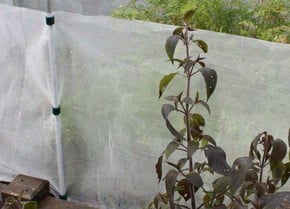
I wonder if you could identify the pest that is eating one of the two bay trees next to my front door. On one of them the leaves have big chunks eaten. Back in the summer I noticed the odd leaf curled up and once I saw a rather large insect I don't normally see on it. The other tree is 2m away and fine. They are both about 8 years old and potted. I feed them each summer with a slow release feed. Lots of leaves are affected and I'm picking the worst off as it’s unsightly.
Bit of a tricky one for most of us, but not Julian! Here’s his reply;
This could be one of the following two;
Tortrix Moth: this moth lays eggs that develop into caterpillars that wrap leaves around themselves. The caterpillars eat large irregular holes in leaves. If it is Tortrix moth, it can be difficult to treat as the leaf wrapped around the caterpillar gives it some protection from sprays. If you can get to the caterpillar (which won’t be there at this of year) try the Insect Killer Spray containing Pyrethrum. The other option is to pick off the leaves with caterpillars in them.
Vine Weevil: if the damage on the leaves is along the edges of the leaf in a half mooned shape, this is vine weevil damage. Did you see a black beetle like insect? The adults eat the leaves, the larvae eat the roots. Treat the compost in the pots with Nemasys Vine Weevil Killer Nematodes in the spring. They are watered into the compost and will kill the vine weevil larvae.
We’ll be featuring further questions and expert replies from Julian at regular intervals – and who knows, the next one could be from you!