









Standard Wooden Raised Beds

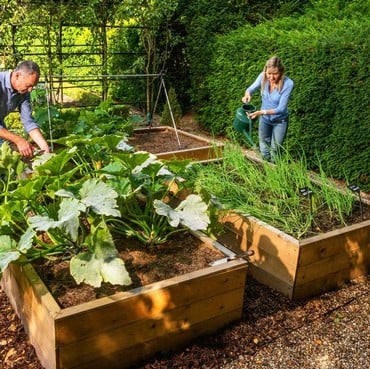
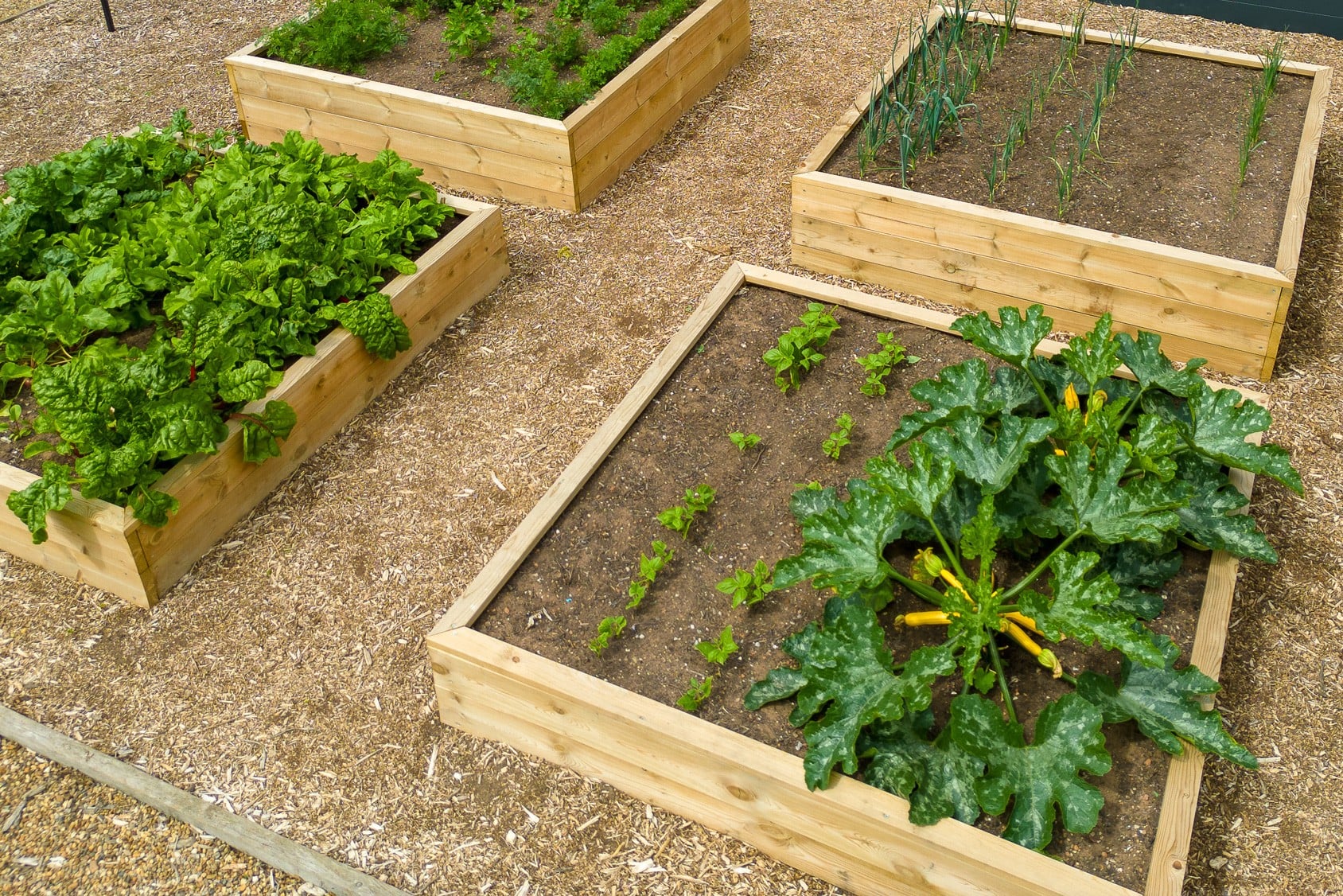
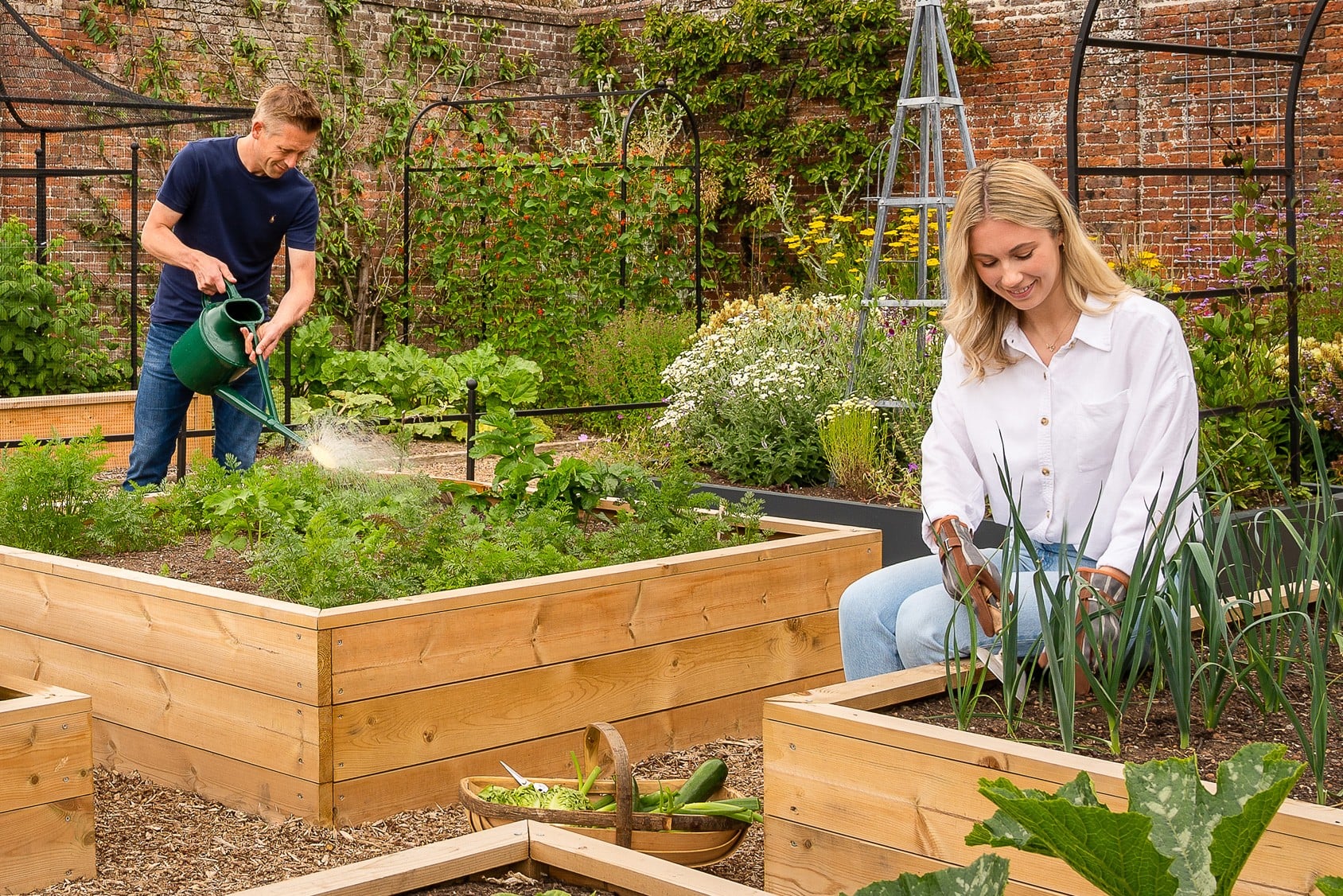
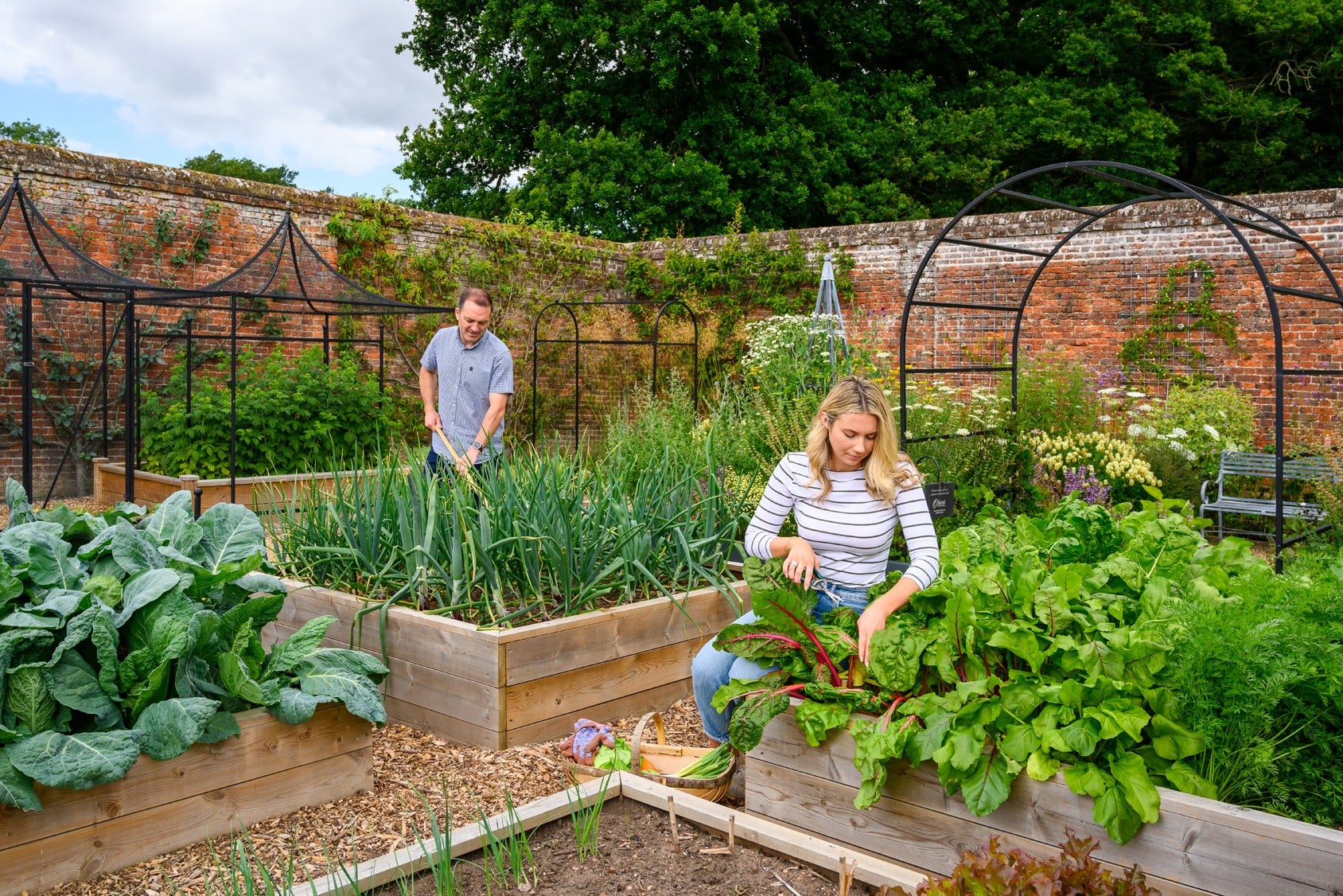
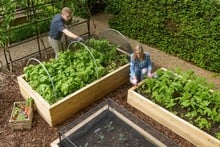
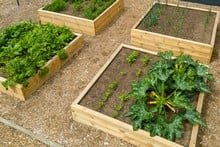
Standard Wooden Raised Beds are the most popular of our raised bed range, highly acclaimed and market leading, these superb raised beds combine quality design and workmanship with value for money and performance. The raised beds are made using longer-lasting thick Scandinavian wooden planks, slow-grown timber for greater strength, planed all round and pre-drilled for easy assembly.
Read More

Guarantee
Standard Wooden Raised Beds are the most popular of our raised bed range, highly acclaimed and market leading these superb raised beds combine quality design and workmanship with value for money and performance.
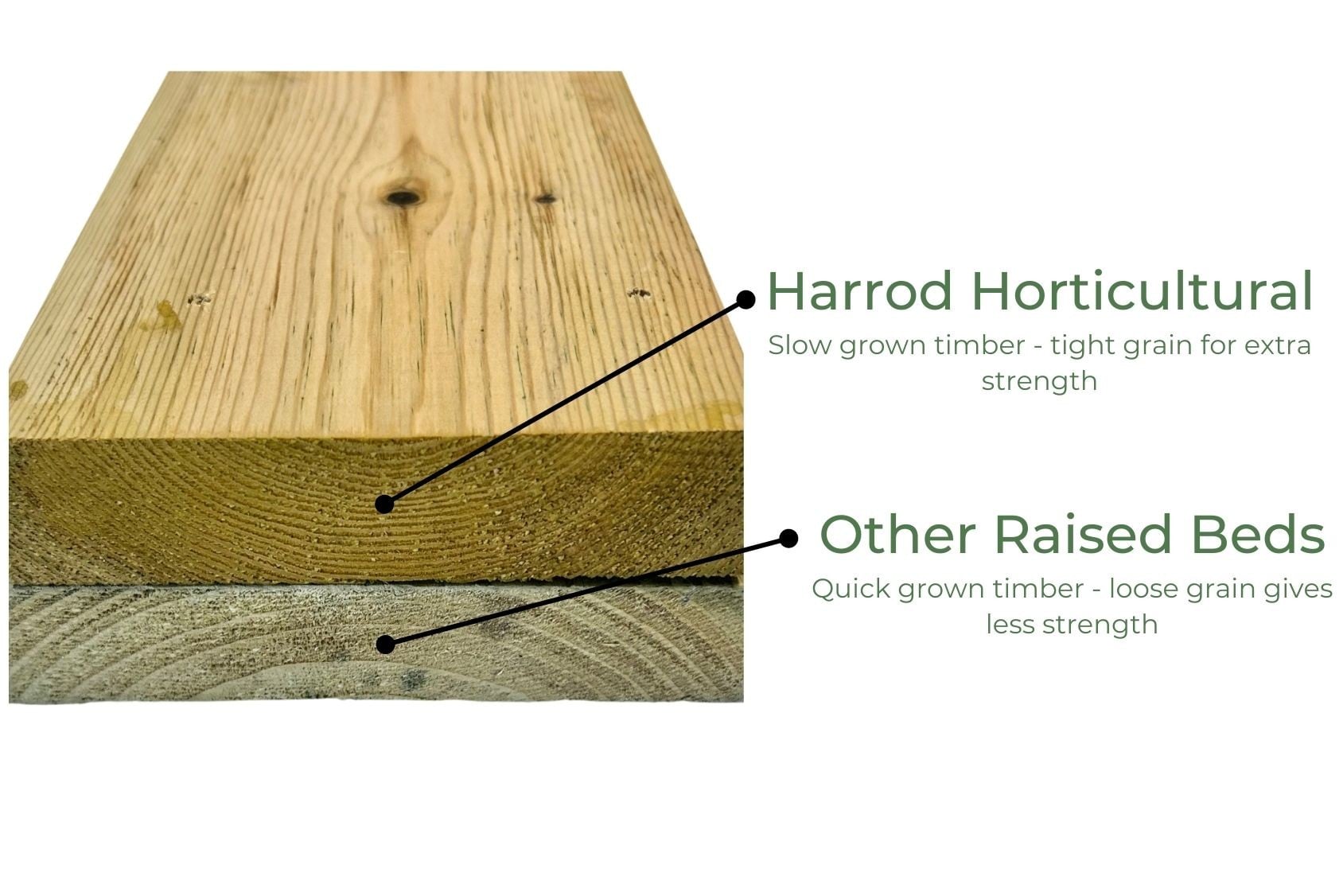
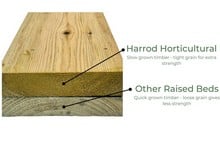
Made from top quality slow grown dense timber containing a greater proportion of the hardier late growth than faster-grown timber. Not to be confused with the less dense wooden planks supplied in cheaper raised bed kits supplied by some of our competitors. This slow grown timber has a much tighter grain (as shown below) which provides greater strength:

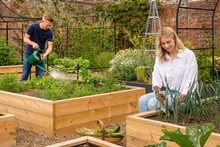
These quality Raised Bed Kits provide the ideal growing conditions for fruit, vegetables and herbs, perfect to ‘Grow Your Own’ in style and with our range of sizes and heights, you are bound to find the ideal wooden raised bed for your garden.
Please note: As timber is a natural product and susceptible to shrinkage/swelling, all sizes are therefore nominal +/- 5mm. Sizes apply to external dimensions.

- Award Winning Raised Bed Kits
- Exclusive design
- Unrivalled range of sizes
- 3 year structural guarantee
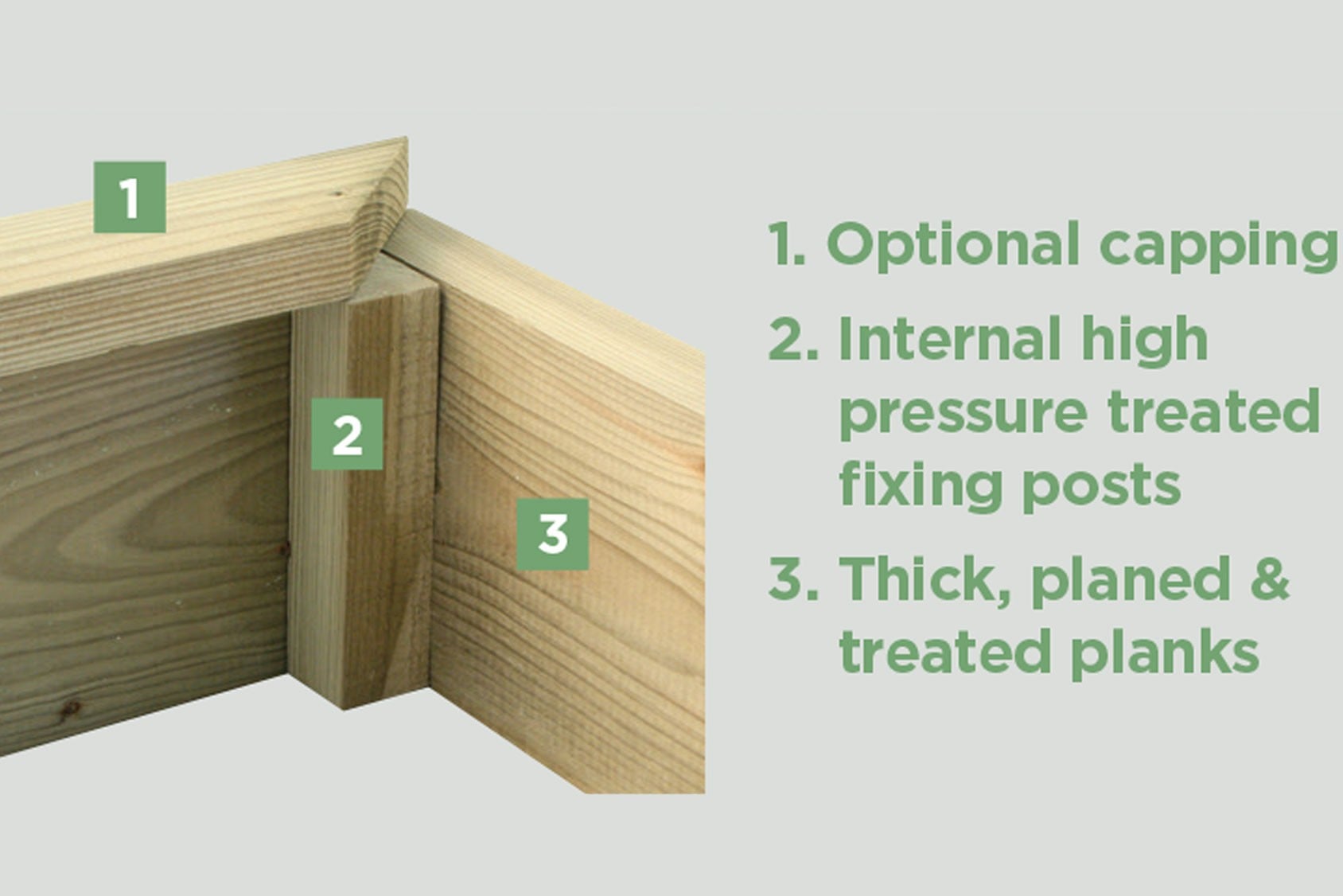
- Standard Raised Beds made from quality 15cm high x 3.5cm/1.4" thick Scandinavian softwood timber planks from sustainably managed forests.
- The timber is kiln dried and selected to a structural standard to ensure high quality.
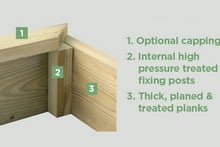
- Optional capping (2.5cm/1" H x 7cm/2.8" W) gives top of beds an elegant finish
- Planks are planed all round
- Available in 5 heights (up to 76cm/30") and 10 length/width sizes.
- Complete raised bed kits include pre-drilled planks, internal wooden corner fixing post and galvanised screws
- Full detailed instructions - simple to assemble
- Each plank depth measures 15cm in height and is planed all round for an attractive finish.
- 5 tier raised bed measures 76cm/30” high - suitable for wheelchair gardeners
- High pressure treated with a non-toxic preservative which is plant and human safe, complies with all EU standards and does not contain CCA (Chromated Copper Arsenate)
- Preservative helps ensure best possible resistance to fungal decay and wood-boring insects
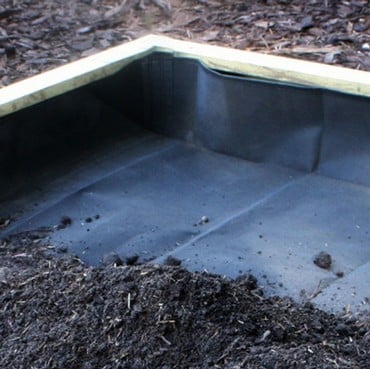
- Raised Bed Liners available separately and are ideal when putting the beds on hard surface
- We strongly recommend the use of an electric screwdriver for assembly. Planks are pre-drilled, but corner posts will require pre-drilling, full instructions included.
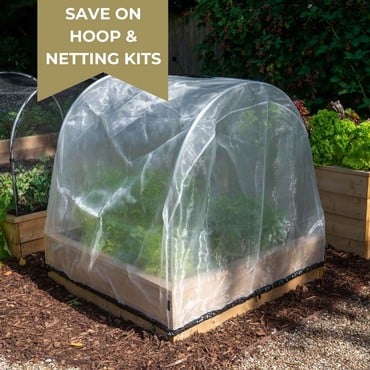
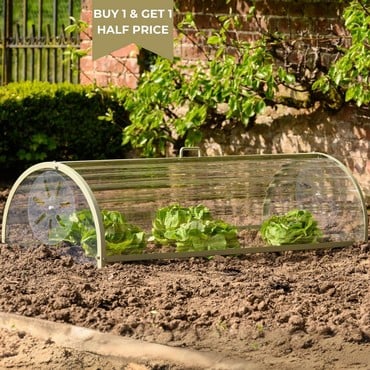
- Various Raised Bed Protection Covers are also available
- Find out more about the Benefits of Growing in Raised Beds

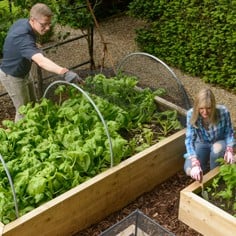
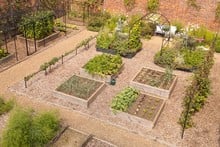
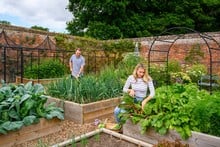
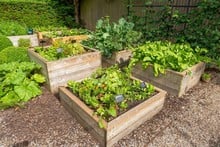
N.B. Images show standard raised beds with capping.
Product Reviews
I purchased 2 timber raised bed kits 11 years ago from Harold, they have just been replaced, the originals having performed very well.
The only regret I have is that the corner posts that hold it all together have not been upsized.
They were the first thing to rot, I have replaced them twice during the life of the boards which have done very well.
If the corner posts were made of a harder timber, they would get 5 stars.
All excellent, even the delivery, all neatly stacked .

Standard Raised Beds - Planning and Planting Information
To help you price up and make the most of your raised beds - and most importantly enjoy growing in them - we've compiled a list of factors to consider when choosing, siting and filling your beds.
For starters, raised beds can be placed directly onto soil, lawn or paving and can be filled directly - but not exclusively, see below - with a fertile, organic rich, light & friable topsoil/compost such as the vegetable and fruit topsoil that we supply via our partnership with Rolawn.

Calculating the quantity of soil you will require to fill your beds is relatively simple; you just need to multiply the length of your bed by the width and the depth in metres, multiply by 1000 and the figure you arrive at is the amount of compost you'll need in litres. All the Rolawn soil we supply is delivered in 500 litre tote bags so you can tell immediately how many bags you'll need to order using the calculation below.
2.4m long x 1.2m wide x 15cm deep = (2.4 x 1.2 x 0.15) x 1000 = 432 litres - 1 x 500 litre tote bag required
For the best growing results, we'd advise you to fill your beds with 75% topsoil and use a bulky organic matter - such as farmyard manure or home-made compost - to make up the other 25%. For more details on filling your raised bed, please contact our Customer Services Team.
One of the benefits of a raised bed is the fact you can tailor the growing medium to the plants you are wishing to grow. For example you can use ericaceous compost for acid loving plants or you may want to grow carrots in sand.
If you want to improve the drainage of your bed you can add a layer of gravel approximately 5cm / 2” deep at the base, but note that the level of drainage will be dictated mainly by the ground that the bed is sitting on. If for example the bed is sitting on a free draining sandy soil you may want to lay down a semi-permeable ground sheet beneath the bed to reduce the drainage. We'd also advise you to use one of our specially designed Raised Bed Liners when positioning your bed on a patio, concrete or other hardstanding area. Not only will these thick, one piece, non-woven polypropylene fabric liners protect the timber frame of the bed even further but they will cut down on the leaching of sand and other fine soil particles - and they make emptying a bed much easier at the end of the season too!
We've also produced a quick guide to the depth of bed you'll need to grow favourite Kitchen Garden crops. This list is by no means definitive but if you're unsure of how many tiers to go for, the over-riding advice is to go deeper - this gives you the flexibility to grow a wider variation of vegetables in the future and also helps with crop rotation.
Here's that list;
|
Vegetable Type |
Depth of Bed Required |
Number of Tiers |
|
Carrots |
30/40cm |
2 Tier at least |
|
Potatoes |
30/40cm |
2 Tier at least |
|
Parsnips |
30/40cm |
2 Tier at least |
|
Beans |
15/20cm |
1 Tier at least |
|
Peas |
15/20cm |
1 Tier at least |
|
Courgettes |
15/20cm |
1 Tier at least |
|
Beetroot |
30/40cm |
2 Tier at least |
If you’d like further information on our Wooden Raised Beds, or would like to discuss any feature of this product, please call our Customer Services Department on 0333 400 6400 or e-mail us at enquiries@harrod.uk.com – we’d be delighted to help!
What The Press Say
Grow Your OwnJune 2019
GYO must-haves
Raise your game - The Harrod Horticultural standard wooden raised beds have been awarded 'Which' Best Best since 2010. Featuring a 3-year structural guarantee, they are available in five heights and 10 width/lengths and include pre-drilled planks, fixing posts and screws. Perfect for allotments, flower gardens or controlling difficult soil.
Gardeners WorldFebruary 2016
Space Savvy Gardens
Inspired to create a raised bed that's a cut above the rest? Here is our pick of ideas to suit a range of budgets and garden styles. Standard Wooden Raised Beds treated with a non-toxic preservative. Sizes vary with prices ranging from £28 - £364 + shipping Harrod Horticultural