








STEPHANIE’S KITCHEN GARDEN UPDATE – NOVEMBER/DECEMBER 2010
Winter has swept into East Anglia – and the rest of the country of course – in no uncertain terms and the early snowfall, whilst creating plenty of great gardening photo opportunities and looking undeniably pretty, has played havoc with my early winter planting programme!
I’d struggle to get through the soil right now with a pickaxe – although the fearsome looking Sneeboer fork and mattock might not be fazed by the frozen ground – so whilst things I Stephanie’s Kitchen Garden are on a temporary hold, I thought it would be an ideal opportunity to let my horticultural trainee Courtney take up her pen/keyboard and let you know exactly what she’s been up to in the garden this winter.
With a garlic backlog stacking up, pests to control (I’m finally getting the idea it’s a 12 month a year job!) and winter seeds to sow and grow, she’s got plenty of Kitchen Garden news to bring you. As for me, I’ll be keeping a watching brief from the comfort of my kitchen as I try to keep warm by cooking up a succession of stews and broths, full of organic, home grown vegetables…!
Courtney – over to you…
So far this month I have been removing all of the old crops from both the ground and raised beds. 80% of the crops have been great for composting, and I ensure that I turn the compost tumblers every time I am over the Kitchen Garden, occasionally adding accelerators and materials to keep it going.
This year we ordered our Garlic and Shallot bulbs from the Garlic Farm. I ordered myself the ‘Garlic Lovers Seed Selection’, which comprised of about 8 different varieties. I am looking forward to setting my sights on the bulbs once they have developed. I roughly have around four Garlic bulb Varieties which need to be planted, as the ground is too hard from all the freezing frosts I have not been able to plant them, so I will plant them into module trays and put them in the greenhouse or cold frame, ready for planting out in spring! We have right up to February as well to get all those unplanted Garlic Cloves out.
I went to plant out my Spring Cabbages at the beginning of the month, only to find aphids in the centre of the heads and on the underneath of the leaves. I have sprayed them with Savona, and thankfully this seems to have done the trick. No more signs of the little green monsters!
The seeds which I have been sowing early this month are Broad Beans (Super Aquadulce), a variety of Sweet Pea seeds, Winter Spinach and Winter Lettuces. Some I’ve sown directly, others are in modules – the beans love the depth provided by the rootrainers - and all have germinated well. I’ll be planting out the module raised plants as soon as the weather allows!
I have used a few of my leeks already, which have been growing strong for months now, and they were full of flavour, absolutely delicious! The white elongated bulb at the base of the leaves makes a very tasty, fresh vegetable, either on its own or in stews or casseroles. The green leafy tops of leeks can also be used - they're excellent for flavouring soups and stews. Leeks are also very nutritious and very rich in vitamin A.
This month I have also mulched the Asparagus bed, its best to do this in late winter to discourage weeds, retain moisture and protect from hard frosts. Consider covering the bed from autumn to winter with an opaque weed mat to prevent annual weeds germinating.
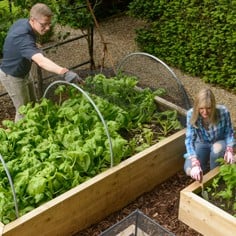
Unfortunately the cold weather hasn’t seen off all the garden pests. We’ve been fighting an on-going battle with mice over at the Kitchen Garden for a couple of years now and at this barren time of the year, little terrors will attack anything and everything green and healthy. I have been covering all edible crops with cloches, wire netting etc to try keeping the ghastly little pests away.
Another pest-busting trick is to let the birds, which, in a strange twist of fate you’ve been trying to keep off the fruit bushes all year, into the fruit cage! I’ve rolled back the side netting on my fruit cage and our feathered friends will enjoy the opportunity to tread on the otherwise prohibited territory and scrabble around for any grubs attempting to overwinter on fruit bushes and just under the soil. This reciprocal gardening agreement benefits the gardener in that pest populations are reduced come spring and you're also providing essential winter food for the beleaguered birds.
This time of the year, as you all know, leaves are falling constantly and making a mess. The only thought I have is “rake, rake, rake”, because I hate the mess they make all over the garden. You spend a good few hours raking, only to go back the next day and find it completely covered over again. Enough moaning though, as leaves are good for one thing; leaf mould! I have started my leaf mould pile using our impressive leaf cage.
My chives have been dug up out of the ground, cut down to roughly 5cm and potted on for the winter. I’ll put a few plants in the greenhouse for a regular winter supply and the others will be left to overwinter outside – but I’m a caring sort and I’ve positioned the pots next to a wall for a bit of stored heat, shelter and added frost protection.
I have also cut the cabbage heads off my Sprout plants, as this will encourage all Sprouts to catch up with one another, because for some peculiar reason the bottom sprouts are the smaller ones! Any ideas why? E-mail me with your sprout size theories!
In the past few weeks I have been ordering seeds and sets to grow in 2011; next year I would really like to experiment using unusual, or rare seed varieties. Once achieved, I shall update you all.
This year product testing has been a huge part in my job role over at the Kitchen Garden; I have been very busy planting new products, seeing how well they work – if at all. It has been very interesting to see all the modern day creations, and to be the voice of feedback. And on the subject of new products; you can see which ones made it through my rigorous testing procedure by requesting a copy of our brand new, 116-page 2011 catalogue. Jam-packed with new gardening ideas for the kitchen garden, patio and greenhouse, it's an inspirational addition to any potting shed or coffee table - and if it's in there, you know it's good!