










Raised Bed Dilemma!
I have just seen the Harrod Horticultural website and spotted the “Ask the Expert” section. I have a question on raised beds.
In my garden there is a large thick concrete base from an old barn. I am keen to use this “wasted” space for vegetables as we do not have lawn/garden space to dig up for vegetables.
I could go through the hard work of hiring a concrete breaker and smashing my way through to a clay soil and then putting raised beds over the hole. Alternatively, I could put the raised beds directly onto the concrete slab.
What do you think? Should I smash my way through the concrete or build up on the solid base?
These are my thoughts and concerns:
Can I put my raised bed on concrete or do I need to go to the trouble of breaking it up...?
Drainage - I know that I will need good drainage and could therefore put the top soil onto some gravel at the bottom of the raised bed (and maybe a micropore geo-textile on top of the gravel too) before loading in the top soil.
Swamp – To avoid an internal swamp I would probably need to ensure there are drain holes at the bottom of the beds. Will be easy enough.
Drying Out - I am concerned about the soil drying out. If it is a good 300mm thick will it be OK, or should I go for deeper beds? I should also be able to rig up a self-irrigation system to avoid too much drying out
Bugs from below – By building on concrete, am I missing out on good/bad bugs from below that won’t be able to get into my veggy bed?
I would be very grateful for your thoughts and advice.
Best wishes,
Tim Vaughan
Firstly, the question of standing raised beds on concrete. Although not an ideal situation for a raised bed, hard surface growing is certainly a popular idea as a number of our customers have placed their raised beds on a patio or in a courtyard setting, enabling them to grow vegetables in an otherwise barren area. And if the soil is clay as you mention in your message, it may not be worth the effort of breaking up and removing the concrete!
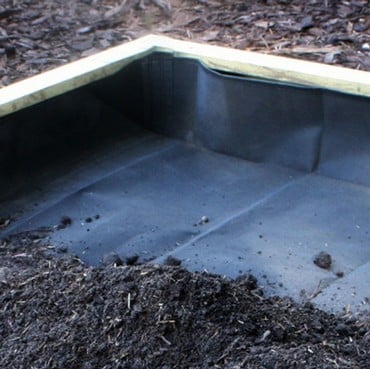
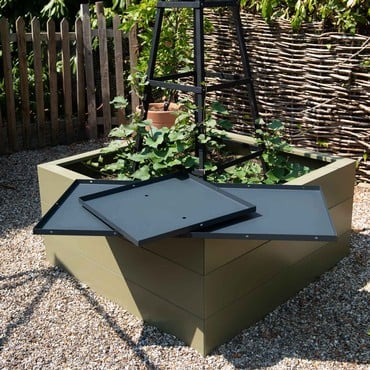
You will need to use a raised bed liner or a raised bed base to cover the issue of drainage and waterlogging, which will prevent leakage onto the surrounding area – and of course is less expensive and time-consuming than preparing the ground. As long as you are careful not to overwater and ensure plenty of organic matter is included in the soil, drainage should not be a problem.
Finally, the question of beneficial creatures such as earthworms entering your soil. It’s true to say that a concrete base will hinder the natural progression of these, and other creatures, into your beds but applying plenty of home-made compost will introduce many helpful inhabitants to your new beds. You can also introduce small amounts of garden soil – including earthworms - when filling the beds with compost and topsoil but in our experience of growing in raised beds, you find the soil is soon colonised by welcome invaders.
I hope this information gives you a better idea of what is required to set up your beds, but if you’ve any further questions or queries, please do not hesitate to contact me.
Many thanks once again for your enquiry and the best of luck with your project.