






April
Top Tips in the Garden
by John Harrison 2008
Author of the Best Selling
"Vegetable Growing - Month by Month
Guide"
April is a great month for the gardener. The soil is warming up
nicely and in theory we have sunshine and showers, perfect growing
weather. The clocks have gone forward so we have longer evenings to
spend in our garden as well. Unfortunately in Britain, we have
weather not a climate and April can go from being positively summer
hot to snow.
Usually Easter falls in April and you may be surprised to know that
there is more chance of snow at Easter than Christmas. So
the rules for successful gardening in
April is not to be in too much of a rush to plant out tender young
plants. It's important to keep the horticultural fleece
handy to protect against frost and to keep an eye open for frost on
the weather forecasts.
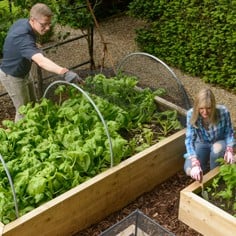
Cloches
really come into their own in April, not only do they protect from
frost but the micro climate they create means your plants will leap
ahead, even if the weather is poor. One good tip with a cloche is
to place it on the ground a week or better still two weeks before
you plant out. This will cause the soil temperature to rise by a
couple of degrees and helps to avoid shocks to your plants when
they leave that cosy greenhouse or coldframe.
If you bring things on in a greenhouse or even a windowsill,
don't make the mistake of planting out directly, even into a cloche
covered patch. Plants need a little time to get used to the big
outdoors and we use a process called 'hardening off' for this. As
the name suggests, the plants become hardened to the cooler
temperatures.
It's really not complicated, you move them from a
windowsill or heated area of a greenhouse to a cooler part of
the greenhouse for a few days and then move them into a cold
frame. Leave the coldframe shut for the first
couple of days, unless the weather is wonderful and sunny, which
would over-heat them. After this, open the vent in the day for a
few days and finally leave the vent open overnight. It will still
give them some protection but it's not as exposed as
outdoors.
If a cold snap develops whilst you are hardening off, you can
insulate your coldframe to keep them warm. In an emergency
newspapers laid several sheets thick and weighed down to stop them
blowing away will do the job but a length of folded fleece is
easier and more effective. By the end of a week or so, your plants
will be ready to brave the big bad world and better equipped to
cope if it snows.
Having covered protecting your plants
against the weather, do remember now is the time when gardener's
worst enemy is coming back to drive us mad. These evil creatures
can make a row of tender seedling disappear overnight or reduce a
plant to a skeleton in hours. I'm talking about the slug, of
course.
I'm sure slugs must serve some purpose in the greater scheme of
things, but to the gardener they are just the enemy.
In the old days we just scattered metaldehyde slug pellets around
by the bucket load and killed them that way but there have been
concerns about the potential effects on pets and wildlife with
those. Now we more environmentally friendly methods of dealing with
slugs and the good news is that these are actually more effective
in many cases.
If you grow potatoes, you'll have had the experience of digging up
a wonderful crop only to find holes occupied by horrible little
slugs munching away. The best cure is to use the Nemaslug slug killer
from the start. This biological control is comprised of thousands
of tiny worms that cause no problem at all to anything except our
enemy. Because they get under the surface, they get all the slugs
unlike pellets.
I still use pellets in a lot of situations but having pets, I'm
very cautious and only use the advanced ferramol based
pellets, They're more rain resistant as well so I
think they're better value for money. Incidentally, only ever
scatter slug pellets very thinly. Piles are ineffective and
wasteful. If they all disappear overnight, then scatter thinly
again and smile. It means the slugs have eaten the first lot and
crawled away to die
There are lots of safe and environmentally sound solutions to pests
and problems now, thank goodness. Some of my older gardening books
read like chemical warfare manuals.
Good luck, and let's hope April is fine after all my dire
warnings.
Copyright © John Harrison 2008
Author of the Best Selling
"Vegetable Growing - Month by Month
Guide"