




|

My first experience with
raised beds was also my first time growing veg, some fifteen years
ago. At the time I lived in Hertfordshire and the soil in my
garden comprised a charming mixture of clay, lumps of sandstone,
iron ore and more clay. In short, it was rubbish. I had a
small front garden and decided that, somehow, I was going to make
it viable for growing a few fresh crops. But how to get over
the wretched, unyielding and impossible to cultivate
soil?
The answer was to construct a
series of raised beds, about 1.2m wide, 2.5m long
and 20cm deep, which were then filled with a mixture of garden
compost and top soil from a heap I had built out of old
turfs. The result was that in pretty unpromising conditions I
was able to grow a fairly good range of crops, including herbs,
salads and so much beetroot that it followed me around for about
six years – every time I moved house I would find a jar or
two lurking in a cupboard.
Raised Beds at Harlow
Carr
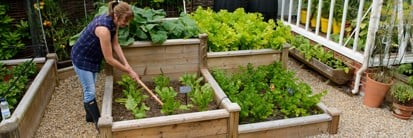
At Harlow Carr we specialise in
raised beds, as our entire Kitchen Garden in comprised
of them, including a range of bed systems from Harrod
Horticultural.
The reasons for
using raised beds as an alternative to growing
directly in the soil are compelling. From a soil management
perspective,
raised beds enable a no dig regime to be put in place,
where the soil is ‘fed’ from above by applying mulch
twice a year, spring and autumn. This enables the soil to
maintain a healthy balance of soil micro-organisms that can be
adversely affected by continuous digging – imagine a fork
coming through your home every other day – and has the added
benefit of holding in soil
moisture and reducing
weeds. And of course if your soil is poor,
like mine all those years ago, it’s easy to manipulate it and
bring in better growing media or making your own by mixing compost
and soil.
Raised beds also warm more readily in
spring, as the sides are exposed to the sun and the growing medium
lifted out of the cold earth beneath, which means you can get
sowing or planting out a little earlier than otherwise.
The size of
raised beds tends to lead to a more manageable approach to
growing too; smaller areas tend to lead to a more realistic crop
yield – my beetroot mountain aside. Finally it’s much
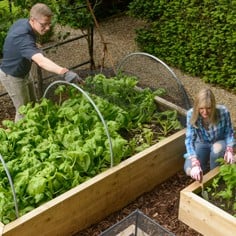
easier to control
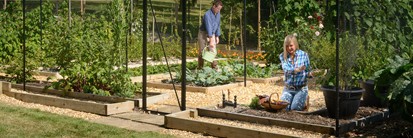
pests with
raised bed systems, especially those from the
Harrod range that can accommodate
crop protection hoops, which enable
insect mesh netting to be put in place – perfect
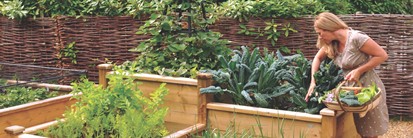
for keeping cabbage white butterflies at bay. We grow lots of
companion plants in our Kitchen Garden, including plenty of
flowers, so the result is delicious to look at and to eat!
Perhaps best of all though is that even a really small garden can usually
accommodate a
raised bed, or maybe two, bringing the fun of growing
veg to those of us who haven’t the time to take on an
allotment, or are in an area where they are in short
supply. In doing so not only are you experiencing the fun, and
delicious fresh taste, of growing your own you’re also doing
your bit to help save the planet, as a lot of shop bought
vegetables are imported from around the world and come with a huge
carbon footprint attached.
Raised beds are really easy to build, and simple to grow with, so
even if you have never grown vegetable before, maybe now is the
time?

|