




|
Jobs for the Month: October

Now is the time to get those Autumn Allium sets planted if not
already done. Here at the Kitchen Garden I plant them on the now
cleared Potato patch. This ensures the ground is not too rich but
nicely dug and with a nice tilth. I do add a dressing of garden
compost though to get em kick started, and a sprinkle of Organic
Root Vegetable and Onion Fertiliser.
All the
beds are gradually cleared with the green matter being
shredded and composted. I will add some Organic Compost Maker as I
add layers of green and brown waste. I have enough waste to create
a new huge heap ready for use as a general soil improver next
year.
I have been helping Dave
by clearing up some of those leaves and popping them into one of
our Biodegradable Leaf
Sacks you just need to fill these with
leaves, stand them in an out of the way corner of the garden and in
the spring you'll have nutritious leaf mould compost.
If you prefer you
could try a Composting
‘Bag' Kit. These have holes
and are extra big and strong, water them well, tie the top tight,
and you will be rewarded next year with crumbly leaf mould to use
in potting mixes or as extra organic mulch/matter for your
beds.
I do not need to bend and stoop at all with my trusty Rake and
Scoop to hand and the new Grab-O-Saurus that
was featured for the first time in our latest catalogue
(my back and knees will be extremely grateful!)
Dave
was most impressed. I am careful though to make sure I only collect
from under those deciduous trees and not from round the
‘acid’ Rhododendrons and Camelias that fill much
of the grounds surrounding the Kitchen Garden. The leaves from the
acid lovers are collected separately , piled up for a good while
and then used to mulch our other ‘acid’ lovers,
Blueberries.
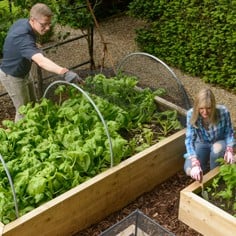
The short-day crops are
coming on now. Spinach in a raised bed is now cloched. Greenhouse
raised Chard and Beet are moved to the cold frame in readiness for
those newly emptied beds. All these new arrivals will be
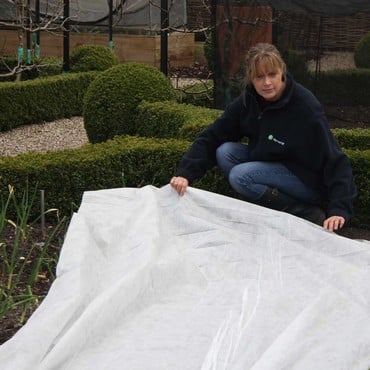
protected with fleece and hoops (
see Harrod Horticultural's great range of Crop Protection
materials). 
I do not take chances with overwintering seedlings in the cold
frame and put a squirt of Organic Slug
Defence Gel around the trays. Check the bottom of all
those plastic pots and module trays as the make the perfect hidey
holes for nasty critters.
In the greenhouse the tomato plants are cleared. Irrigation
systems lifted , cleaned and stored and glass shined. Later
comes a scrub down of all staging, walls and floor. This will
ensure I start next season with a clean slate reducing the
probability of virus etc. Do not forget the greenhouse guttering
this time of year; blockages of leaves on the outside can create
leaks inside, and often in places you wouldn’t
expect!
New apple trees have
been ordered and will be planted out later this month. Espalier
trees are supported with
Gripple and Wire set ups which can be
customised to your particular position, used with big posts these
are easy to chop and change. I will dig a nice big planting hole
and add some organic matter before firming in really well (we have
very sandy free-draining soil).Be sure when choosing trees to get
the right ones for your situation, the right groups for pollination
and your supports sorted out.
Be sure to keep a check on that stored veg. Tomatoes set to ripen
can easily mould, so pick out and use or discard any suspect
fruit that’s split or bruised. Potatoes stored correctly last
a good while, don’t let them get too cold in unheated storage
spaces though, as they will go sweet and nasty. Be especially
vigilant with your spud sacks if you suffered the dreaded
‘blight’. Likewise check carrots, apples, beets,
etc. regularly.
As you can imagine there's plenty still to keep me occupied and
warm on those chilly, windy east coast autumn
days.
.

|