




|

Top Tips for: September
September in the
garden...
September is another
fickle month. Some years we have a wonderful Indian summer and
others autumn arrives early. Still, it's very much a harvest month
where we reap the rewards for our labours earlier in the
year.

If you're fortunate enough to have apples or pear trees, then the
chances are you're wondering what to do with them all. One
solution is to turn them into juice. (See John
Harrison's recipe for making Cider)
You can drink the
juice as it comes, freeze it to enjoy throughout
the year or turn it into delicious home made cider or perry. You
will find a
fruit press saves you a lot of time and is far more
efficient at getting every precious out.
With all this harvesting going on at this time of year, you'll be
producing a lot of 'waste'. Potato haulm, sweetcorn stalks and
brassica stems. Of course, to the gardener, there is no waste, just
compost material. If you have the use of a shredder, it's
well worth shredding the more woody materials. It's amazing how
quickly shredded materials rot down compared with normal. The
shredded pile is heating up before you have even got it to the
heap.

If you don't have a shredder, try bashing thick brassica stalks
with a lump hammer. It will break them up enough to get them rotted
down in one go.
I always make my compost heap in 6 inch layers, dusting each
alternate layer with garden lime and the next layer gets a nitrogen
source like pelleted chicken manure or dried blood. You can also
use a small amount (about a tablespoon) of sulphate of ammonia.
This method gets the heap heating quickly and the lime keeps it
sweet. By sweet, we mean the lime stops it from being too
acid.
We love tomatoes and as well as the greenhouse tomatoes, I grow a
row of outdoor plum tomatoes to bottle and freeze throughout the
year. The main trouble is that due to the British summer, as we
jokingly call it, often there are lots of green and immature
tomatoes as the weather turns colder.
There is an answer, you
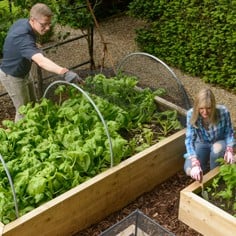
can extend the season by cloching the tomatoes with insulating
fleece. You need to provide some
large hoops to support the fleece over the
plants but these last for years and you should get a few years use
at least from the fleece. Incidentally, there are different
qualities of fleece and the cheap ones do not, in my experience,
give good value. They rip easily and you're lucky to get two years
from them.
The other problem with my
outdoor tomatoes is the dreaded slug. I grow the plants through weed
suppressant matting, more to keep the fruit clean than
suppress weeds and to make slug spotting easier.
Although there are lots
of slug
barriers available, I just lightly scatter some advanced slug
pellets around.
They're wildlife and pet friendly, which is very important, but I
find they are more rainproof than the conventional metaldehyde
based pellets. Don't put down too many at a time, follow the
instructions and use sparingly.
Talking of slug pellets, when storing potatoes, drop a few
pellets into the sacks with them. You'll be amazed how
often a slug is hiding in a potato, waiting to come out and damage
more of your crop in store. The pellets attract them out of hiding
and kill them.
Copyright © John Harrison 2008
Author of the Best Selling
"Vegetable Growing
- Month by Month Guide" and
Editor of the Allotment Website: www.allotment.org.uk
|