




 |
|
|

Top Tips for: May
April is a great month for
the gardener...
|
|
May is usually one of
the best months in the garden, sunshine has warmed the soil and
everything is growing well. Unfortunately, there's often a sneaky
late frost in May.
Keep some fleece handy, just in case. Two years in a row I've lost
my runner beans to an unexpected frost when I've been away.
Lucky for us, mother nature is very forgiving and a second sowing
still came through for me.
|
|
Apart from late
frosts, we can also get caught out by unexpected strong sunshine.
There's nothing worse than finding a greenhouse full of plants
wilting in the heat. That's where some automation comes in useful.
I have automatic vent openers
fitted.
They're really cheap, effective and very easy to fit to most
greenhouses. The watering system is automated as well, self watering kits can make certain your plants survive even if you
are away from home for a few days.
|
|
|
|
One thing to remember when watering
greenhouse plants is that the water direct from your tap is
probably only 5 deg C. So there's your happy warm plant and you
give it a freezing cold shower. They don't like it any more than
you would.
If
you can arrange to store water in the greenhouse, even if only a
day or two's supply
then it will have warmed to the ambient temperature and your plants
won't be shocked. It also has a secondary benefit as your water
butt acts as storage radiator, keeping the greenhouse warmer at
night. The 100 Litre space saver water butt
is ideal for this.
|
If, like me, you're a
vegetable grower then you'll have had problems with the carrot root
fly. Not only does the little beast go for carrots, but she also
causes problems with parsnips and even celery. The fly’s
maggots cause the damage, killing seedlings and tunnelling just
under the skin of more mature plants, leaving brown tunnels
behind. The fly is active in
April and May, using its incredibly sensitive scent radar to target
the crops. The fly tends to fly near to the ground and vertical
barriers around root beds are somewhat effective at keeping them
away but the best course of action is to cover with some fine insect mesh
netting.
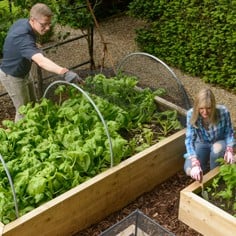
Carrots and parsnips really do well in raised beds where you can ensure a deep light soil. By using a
protection kit you can easily cover with fleece, without crushing
the foliage below. For ground sown crops, easy fleece tunnels provide the same protection and improved growing
conditions without a lot of effort.
If
it is a dry May, it is a good idea to soak your seed drill before
sowing and then just water with a watering can with a fine rose after covering with soil to settle
things in. Two points on watering with a can, firstly using a fine
rose will help the water get into dry dusty soils and composts
where a medium rose will cause the water to puddle on the surface.
The other point is if you point the rose upwards, when you
pour, the water rises before falling and hits the surface more
gently. It's much easier to try out for yourself than
explain.
|
|
|
|
Don't forget to keep
successional sowings of salad crops going. I like to sow every fortnight so there's
always some crop at the peak of perfection and ready for the
table.
Here's to a good season for us!
.
|
|
|
|
|
|
|
|
| |
|
|
 |