



|

Top Tips for: June
June should, with a bit of
luck, bring us hot sunshine and the risk of frost has passed for
most of us in the UK.
|
|
It's a
busy month in the garden, but as we approach the longest day on the
21st June, we've plenty of daylight to work in.
If we are lucky and get the hot
dry weather we love, then we've got the problem of keeping things
watered. Never satisfied, are we? We all know about conserving
water nowadays, if only to keep the meter reading down. What many
people don't appreciate is the way we water is important in
conservation.
|
|
Sprinklers are extremely easy to
use; set them up, connect the pipe and leave them to it.
Unfortunately much of the water hits the ground and evaporates in
the sunshine. A much more efficient method
is to use a soaker hose. These are porous hoses which you can connect to
the mains or to a water butt and they allow the water to soak slowly into the
ground and the surrounding soil. Evaporation loss is negligible and
the water gets to where it is needed.
|
|
|
|
When
watering, you are much better off to give a good soaking every
three days or so rather than a little drink every day. The reason
is that the little drink keeps the surface damp even when it is dry
underneath and the plant roots are encouraged to stay near the
surface. A
good soaking will go deep down under the surface and the plants
will be encouraged to go after it. Before deciding you need to
water, just check first. Scrape an inch or two of topsoil off, then
insert your 'water meter mark one' or index finger as I call it,
into the ground. You'll be surprised how often a dry surface covers
a damp soil below. Finally on watering,
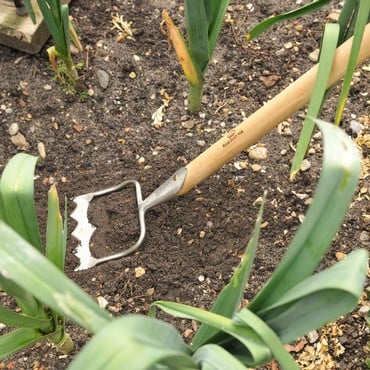
hoeing
the weeds off will also break up the surface
of the soil, this prevents capillary action from drawing precious
water to the surface of the soil to evaporate in the sun.
This is the time of year when the vegetable grower is
getting the first crops out. Early potatoes that taste like a
different vegetable to shop bought being my favourite early crop.
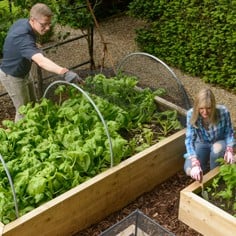
As a space clears, don't just leave it. All that will happen is the
weeds will grow. Try sowing some Dwarf French beans
in the space. They're fairly
fast to crop and being a legume that produces its own nitrogen,
actually add some value back to the
soil.
|
|
If you're
fortunate enough to be growing in a potato barrel, don't forget you can remove enough tubers for a
meal and leave the plant to carry on growing. There's no need to empty it
in one go. On the subject of barrels, I've
got a strawberry
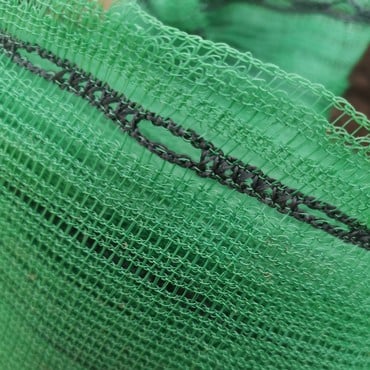
barrel. Not only does it allow me to grow 4 times
as many strawberries in a given space, it also comes with a net to
keep those pesky birds from eating my crop. Let them grow their
own, I say!
|
|
|
|
Talking of pests, don't forget
to keep on top of the slugs. You might not see them in the day but
they're just waiting for dusk to come out and eat their way through
your plants.
I favour using the safe slug pellets that are harmless to wildlife, we don't want to
hurt our predator allies, but there are a wide range of traps and deterrents available.
|
|
Hopefully
you'll be enjoying some salads now, don't forget to keep sowing
each fortnight to replace what you eat or what goes over. I never
worry too much about a bolted lettuce. They'll compost so all I've
really lost is a few seeds. Incidentally, if you've got a lettuce about to
bolt, try cooking it with peas or even making a lettuce soup. It's
a more versatile vegetable than you might imagine and if you want
some recipe ideas click here
Let's hope you're not reading this because
we've a monsoon!
Copyright © John Harrison 2008
Author of the Best Selling
"Vegetable Growing
- Month by Month Guide" and Editor of the Allotment
Website: www.allotment.org.uk
|
|
|
|