




Home
About UsCatalogue RequestNews and ReviewsKitchen GardenKitchen GardenContact Us
for our newsletter and special offers
RegisterLoginBasketbasketCheckout
0.00
Basket
0
Basket
Print Email a friend
Leave a Product Review and have a chance to win £20!
Search our Site
Request a Catalogue

John Harrison's Top Tips
Top Tips for
: November

November in the garden...


November is a quiet month in the vegetable garden. There are still some crops in the ground like the brassicas to look after but really not a lot to do to look after them.


That doesn't mean there is nothing to do. With the warmer winters we have been having, the weeds are growing when in the past they would have been dormant so we have more work to do than in the days before global warming.

Sneeboer 6" Push Hoe

Talking of weeding, the difference a decent hoe makes to the job is just incredible. I like a push hoe, there's more than one type of hoe by the way, but I like a push hoe. There's a trick to using them and once you have the knack it's amazing how quickly you can weed a row or even a large patch.

The idea is to hold the hoe's handle at an angle so that the blade is horizontal to the soil. You then push the hoe so that it is just below the soil's surface. Not deep, just quarter or half an inch or so. Once you have a rhythm going back and forth it's not hard work and those weeds just fall over.


Sneeboer Tool Maintenance Kit

Now this is obvious to some, but many new growers miss it. The sharper the hoe, the easier and more effective the job. A blunt hoe will push the weed seedlings out of the ground. Now weeds are tough little devils and if they're just lying on the surface half the time they manage to re-root and are back before you know it. A sharp hoe, however, decapitates them and re-growth is rare.

If you've got autumn planted onions, don't forget to keep the weeds off them. Sneeboer Hand Hoe/WeederNow there are few things sadder than cutting through your onions, so for this job a smaller hand hoe is ideal. If you keep on top of things at this time of year, you make your life a lot easier in the spring.

If you grow on raised beds, then the most you need to do is keep the weeds down and lightly fork over the surface to keep the soil light and fluffy. If you grow conventionally, then continue digging over.

With a clay soil the earlier you can get the digging done the better. The action of frost will really help break it up for the spring. The water freezes, which expands and pushes the soil apart then thaws, running into the gaps and repeats. The difference between the texture of soil dug over in early winter and early spring is remarkable.

The winter dug is so much easier to work.

Timber Raised Beds (Standard)
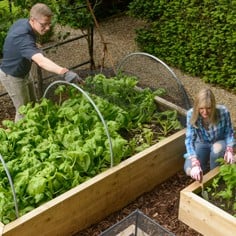
Of course, you might decide to stop all this hard work and install some more raised beds. Back in 2007 when the rain never seemed to stop, the lower end of my plot just drowned. Plants need water but even my runner beans drowned, as the water table was so high. One benefit of a raised bed is that you lift the plants above the water table in a wet year.

Heavy-Duty Anti Bird Netting
Don't forget to check your defences. Those brassicas are what pigeons call a tasty treat and if the netting has shifted, leaving a gap, they will find it. Also, if it has sagged the pigeon will happily sit on the netting and peck through.  It's well worth spending a few minutes to tighten things up.


Copyright © John Harrison 2008
Author of the Best Selling
"Vegetable Growing - Month by Month Guide"  and Editor of the Allotment Website: www.allotment.org.uk


.


Buy fruit cages, garden supplies and greenhouse equipment online from Harrod Horticultural (UK).
e-commerce by screen pages