



|

How do you satisfy a larger-than-life passion for growing things in
a pocket-handkerchief-sized patch where treasured exotica and
endless little pots of this and that jostle for space with
children’s play things and the paraphernalia of that
brief-summer-season ‘al fresco dining’ thing?

This is how I started gardening, and it certainly became a lot more
rewarding once I got organized. So ditch some of the clutter,
rationalize the pots, make space for a wormery to
turn your organic kitchen waste into useful compost and liquid
plant food, install a compact water
butt and
movable containers for summer veg or flowers. You can
transform even the smallest space into a real little
garden.
Living with the
reality
The micro-climate of a tiny sheltered patch close to the house,
a boon in some ways, has one great disadvantage: with fewer frosts,
pests can cause havoc. Add to this the frequently sour,
tired, dusty soil and shade cast by boundaries and
buildings: plants can find it really tough out there.

What are the key points to
remember?
• Every leaf matters in a small space so success
relies a lot on controlling those
pests.
• The
hard-pressed soil will need regular additions of organic matter.
Shrubs grown permanently in containers will need to be fed and
re-potted as they grow, or at least have the top few inches of soil
replaced each year.

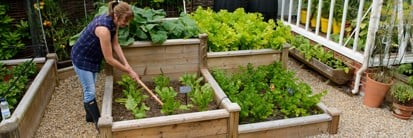
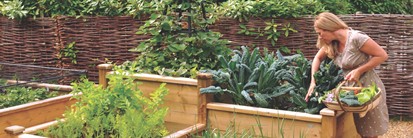
• Work out just where the best planting areas are and
where enough light and rain fall throughout the year. Plants will
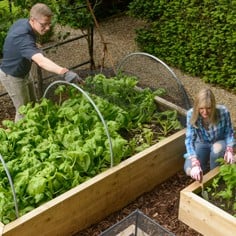
do well (and will get more light) in slightly raised wood or
brick-edged
beds of compost-enriched soil.
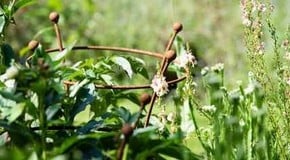
• Floppy stems may need some nifty
support, especially in draughty corners.

• Be clever with the planting: That
‘sunny patch’ may only be really sunny in high summer,
remaining dank and sunless for the rest of the year - definitely
not the place for ‘Mediterranean’ planting. Instead,
enjoy the shade: go for contrasting leaf shapes, textures and
colours and where possible plant a flowering evergreen or
two. In summer, white-flowered plants ‘glow in the
dark’, while ferns and potted hostas (protected from snails
by
copper tape look cool and sophisticated.
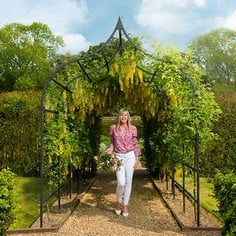
• Use those walls and fences. Few climbers
naturally ‘cling’, however, so most of them need extra
support. Rampant climbers will need careful pruning
and training, particularly on north-facing walls, since they will
determinedly scramble away to find the light - and flower,
irritatingly, on the south side.
What about herbs and
vegetables?
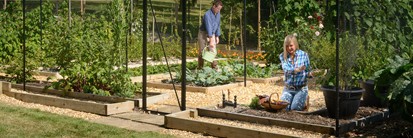
As a complete beginner,
I managed to grow 13 varieties of vegetables in my tiny paved
garden in West London years ago – even ridge cucumbers
thrived against the sunniest wall. Summer salads and a wigwam
of beans can be grown in suitably placed troughs and
tubs, and of course growing strawberries and potatoes in
specially designed containers can be – literally
– child’s play.
Many herbs are
sun-lovers, lax and scruffy for much of the year. However, an
always-handsome aromatic such as rosemary or bay, as well as
tomatoes will grow well in a large
container that can be moved around to follow the
sun, while chives and even parsley will tolerate shade.
There are some really
clever back saving innovations to
grow in too that make use of every little bit of spare space.
These
frames allow you raise your growing level from the
floor making sure your crop is out of reach of soil borne diseases,
slugs, mice and other ground crawling pests. They even
maximize light and ventilation for your plants making sure that
they grow as strong and healthy as
possible.
|